PVY Z20 Pro Evo Review

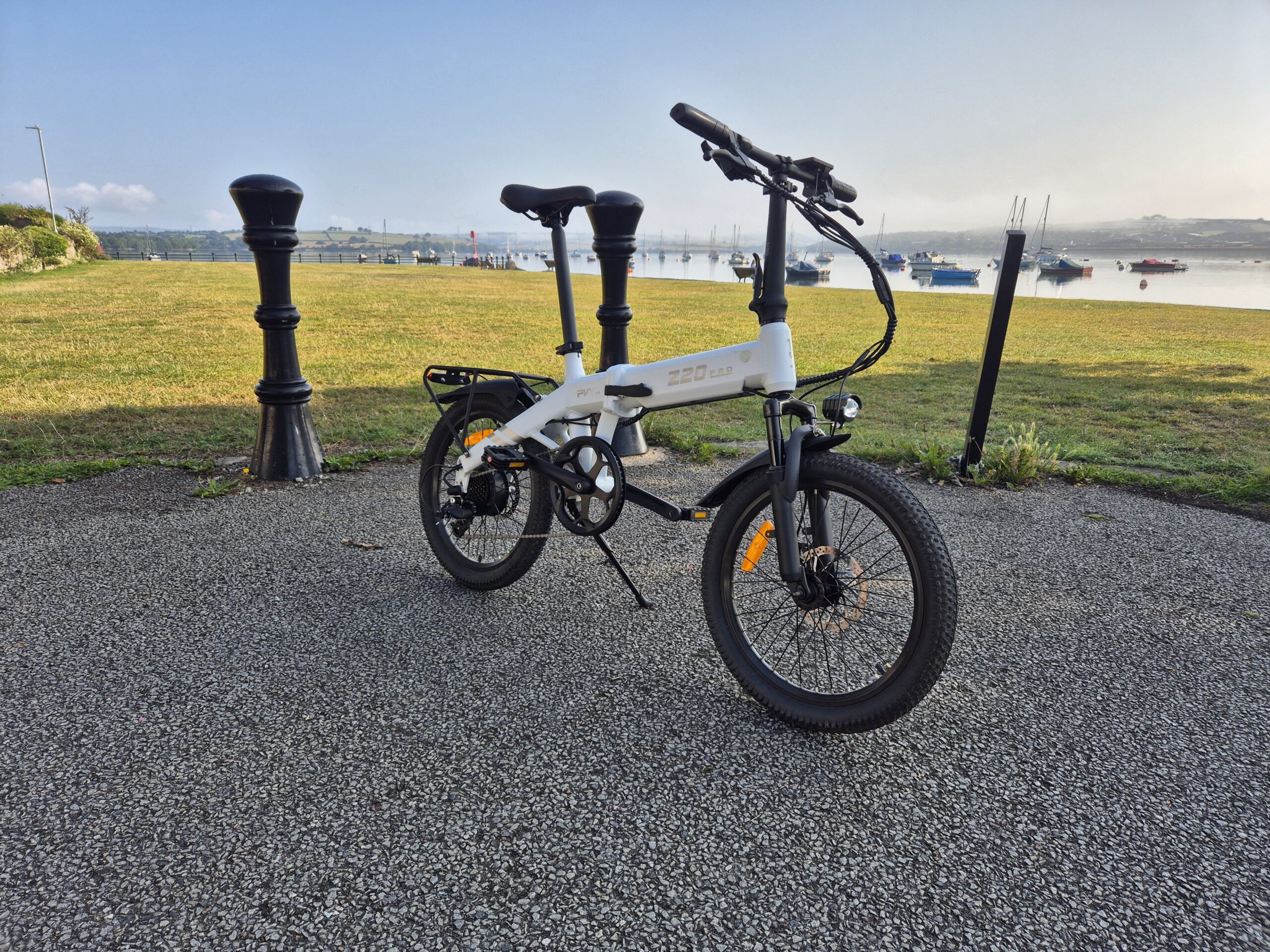
Over the past couple of months, I’ve been putting the PVY Z20 Pro Evo through its paces, from quick trips to the shops to weekend Stuart delivery shifts. PVY has built a reputation for turning out straightforward, budget-friendly electric bikes, and having ridden models like the Z20 Plus and the original Z20 Pro, I was curious to see how this newer version stacked up. The Evo aims to refine their formula rather than reinvent it, offering a low-cost folding e-bike with a few welcome upgrades.
On paper, the Z20 Pro Evo looks surprisingly well equipped for a sub-£800 folding bike: a torque-sensing pedal-assist paired with a 250 W rear-hub motor, a 36 V 14.5 Ah (522 Wh) removable battery, and a familiar alloy folding frame with plenty of adjustability. It comes with mudguards, lights and a small rear rack. At first glance, it seems like a capable everyday runaround – but is it any good as a delivery e-bike?
PVY Z20 Pro Evo
A budget-friendly folding e-bike that’s fine for short commutes and errands, but falls short as a dependable delivery workhorse.
Pros
Better-than-expected brakes and gearing
Torque sensor
Plenty of adjustment in the seatpost and stem
Cons
Suspension fork is weak, and undermines handling
Motor struggles on steeper hills
The lights aren't great, and the mudguards are flimsy
Unboxing and Setup
Being a folding bike, the Z20 Pro Evo was nice and easy to assemble. Out of the box, all I needed to do was unfold the pedals, set the saddle height and lock the handlebar stem in place. That was it.
For a bike under £800, it was good to see a torque-sensing pedal assist and a decent-sized battery (more on that later). The battery is housed inside the main frame beam and can be removed for indoor charging using the supplied key. Charging from empty took around 4–5 hours.
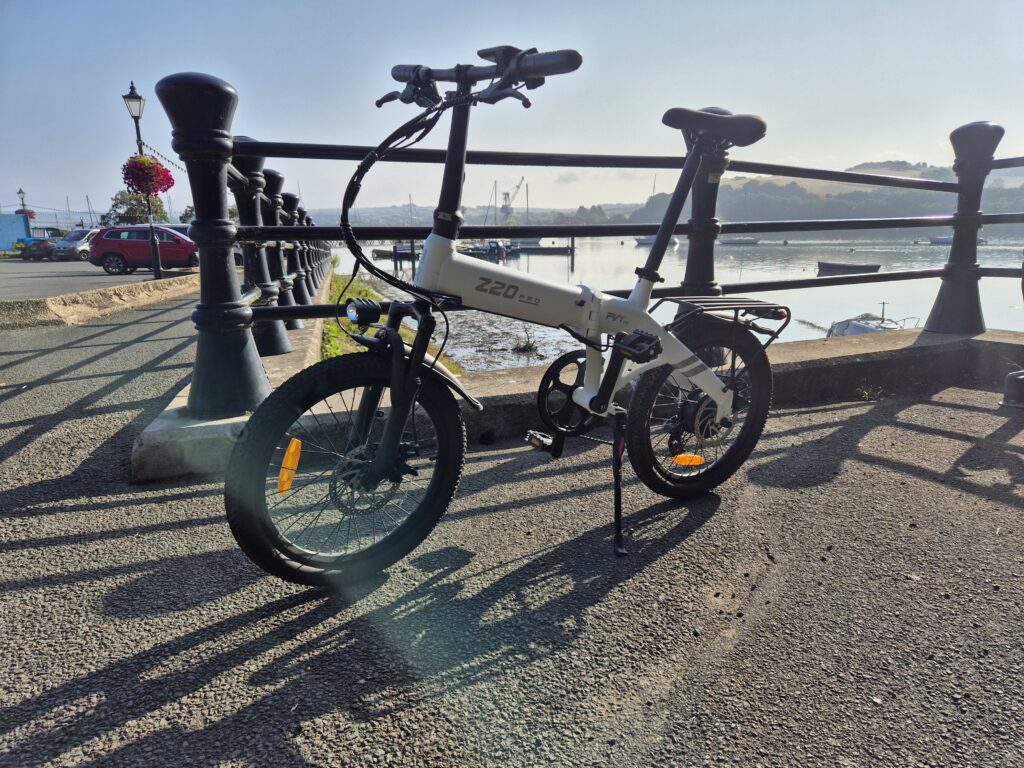
Once unfolded, the bike has a “big bike feel” thanks to generous height adjustment in both the seatpost and handlebar stem. It’s easy to get a comfortable riding position regardless of height.
First Impressions on the Road
The folding design uses the standard three-point method: centre latch, folding stem and folding pedals. There’s no magnetic clasp to keep the bike together when folded – disappointing, but not a deal-breaker. The latches themselves feel solid and click cleanly into place. The frame also gives a good first impression: the welds look neat, the joints feel sturdy, and the paintwork is uniform with no blemishes or marks.
One thing worth noting early on is the weight. At just under 23 kg, the Z20 Pro Evo is on the heavy side for a folding bike. It’s manageable enough for short lifts, but if you’ve got multiple flights of stairs to deal with, it may become a bit of a chore. This is something potential buyers should keep in mind, especially if portability is a priority.
After charging the battery, I headed out for a short ride around town just to get a feel for things. From the start, the motor kicks in quickly and delivers a steady, predictable level of assistance. Being a torque-sensing setup, I expected the power to increase or decrease more noticeably based on pedal effort, but in reality, I couldn’t feel much difference – the assist behaves more like a refined cadence system. That said, when you reach the assist cut-off, the transition is smooth enough not to ruin the experience.
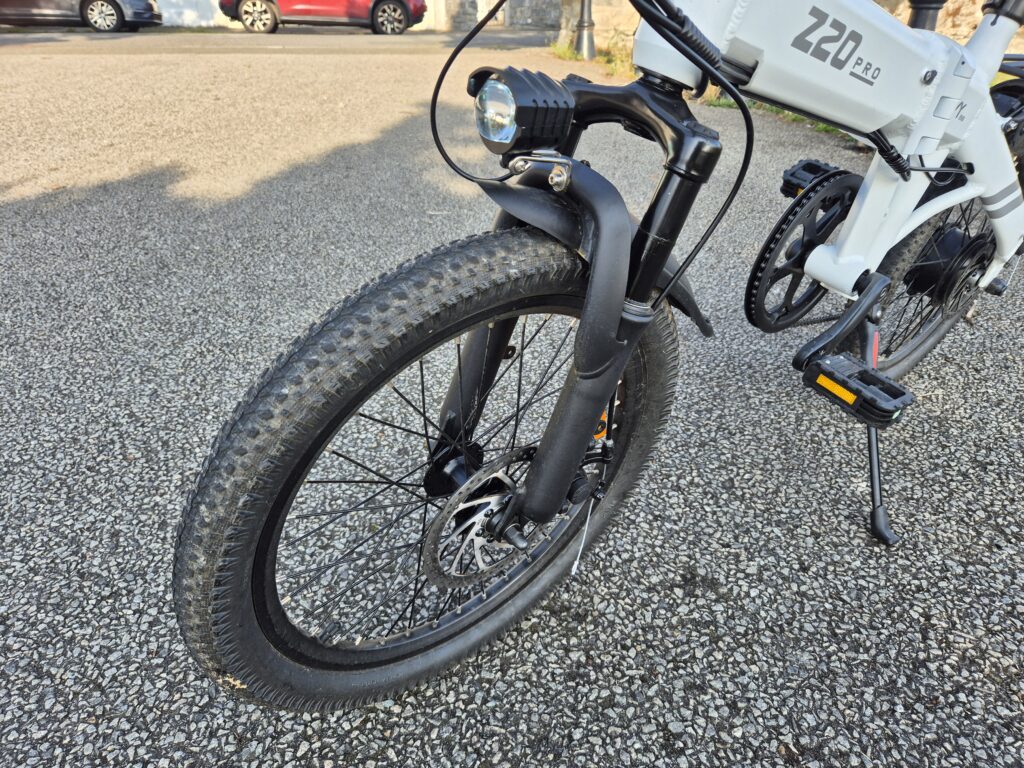
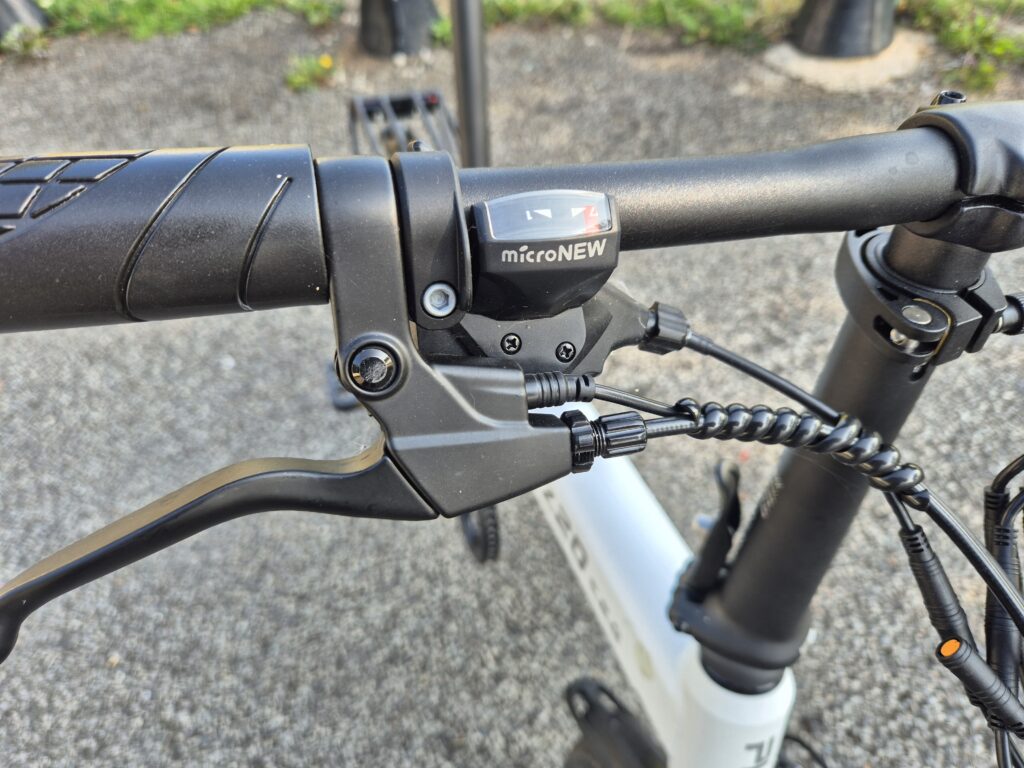
Component-wise, I wasn’t expecting much from the gearing, as PVY uses a little-known Chinese brand called MicroNew, but I was pleasantly surprised. The shifting is smooth, predictable and uses a Shimano-style trigger shifter rather than the old-school thumb levers often found on budget bikes. In two months of riding, it never slipped or mis-shifted.
The mechanical disc brakes were also better than expected. Compared to the older Z20 Pro, whose brakes were one of its biggest weaknesses, the Evo’s larger calipers provide decent stopping power and remain consistent once bedded in. They needed minor adjustments after a few weeks, but that’s normal for mechanical setups.
Unfortunately, the suspension fork remains one of the bike’s weakest elements. Although the chunkier CST tyres soften impacts slightly better than the previous model, the fork itself hasn’t improved much. It has very limited travel, feels flimsy, and bottoms out with a loud clatter over even small potholes. Handling is predictable on smooth ground, and the bike is comfortable to ride, but the fork undermines confidence whenever the front wheel encounters rougher surfaces.
Delivery Riding and Real-World Range
For proper testing, I took the Z20 Evo out on a Sunday morning Stuart delivery shift, delivering Tesco Whoosh orders across Plymouth. On flatter roads, the bike feels lively and nippy, and the motor is smoother than older PVY iterations.
As previously mentioned, the torque sensor behaves more like a basic cadence sensor. It provides instant pedal assist, but doesn’t noticeably increase or decrease power based on how hard you’re pedalling. At this price point, that’s forgivable – but don’t expect the kind of sensor found on more expensive bikes like the Eovolt Afternoon Pro.
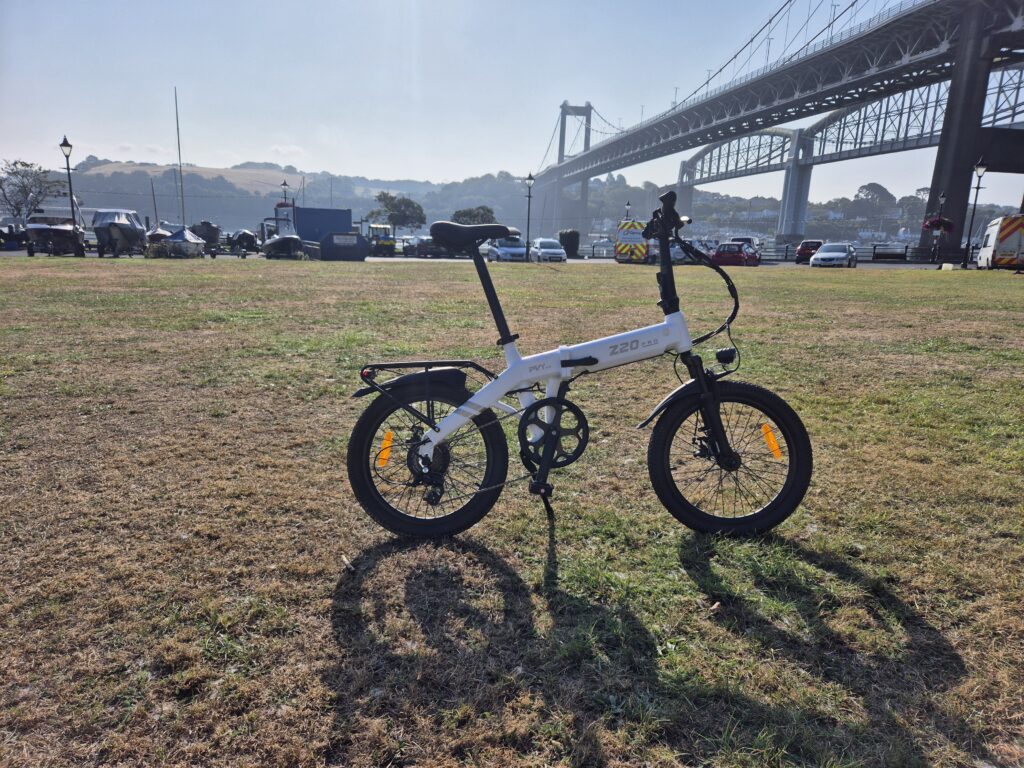
On hills, the 250 W rear-hub motor quickly runs out of steam. Anything above a 10% gradient becomes a grind, and I found myself relying heavily on maximum assist.
With the bike in full-power mode for most of the shift, I hit 22 miles before the battery dropped to two bars. After several more rides, the real-world range settled at around 25 miles before hitting a single bar – not terrible for the price, but limited for delivery work, and I would have expected a bit more from a 522Wh battery.
When the battery gets low, there’s a noticeable drop in assist, though the bike remains pedalable due to its relatively low weight compared with fat-tyre folders.
Braking, Gearing and Handling
As mentioned earlier, the brakes and gearing were positive points. MicroNew’s trigger shifter feels refined for a budget bike, and the indexing remained consistent through wet, gritty winter riding. The drivetrain never gave me any issues.
Handling is generally stable on smooth surfaces, helped by the chunky CST 20″ tyres. However, things change drastically when you hit a pothole or uneven surface. The weak suspension fork causes the front end to clatter, bottom out, and twitch nervously, which doesn’t inspire confidence when riding at speed or carrying weight.
Battery, Display and Accessories
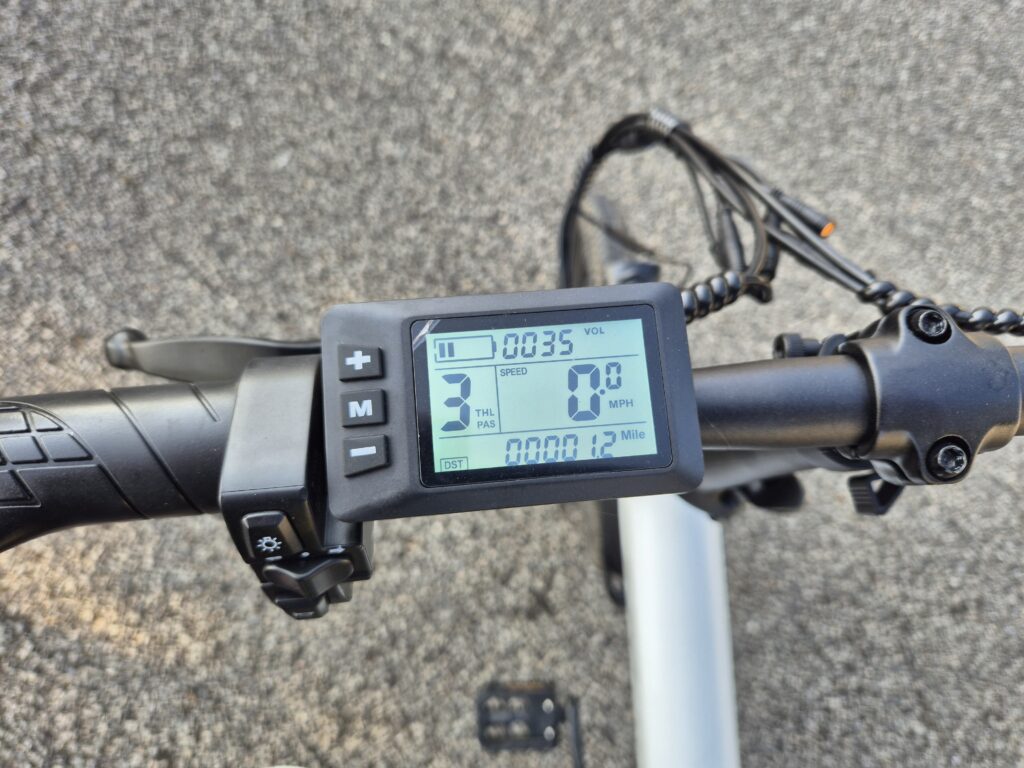
The removable battery is useful if you don’t want to take the bike indoors to charge. The display is a simple LCD panel showing speed, battery level and assist mode – basic but functional.
Accessories include plastic mudguards, integrated lights, a kickstand and a small rear rack. The mudguards were too flimsy and rattled constantly, so I removed them early on. The front light was only suitable for riding in areas with street lighting, and it later stopped working altogether.
The rear rack is fine for a small bag, but definitely unsuitable for a fully loaded delivery backpack or food box.
Verdict
All in all, the PVY Z20 Evo is pretty good for a budget folding e-bike. It has a few genuine surprises – namely, the better-than-expected brakes and gearing, and the lively feel of the motor around town.
But as a delivery bike, it falls short. The suspension fork is too weak for urban abuse (or any abuse for that matter), the range isn’t sufficient for multi-hour shifts, the lights aren’t up to scratch, and the motor struggles on steeper hills. For short commutes or general errands, it’s perfectly fine. As a daily workhorse for a delivery side hustle, you’d be better off spending a little more on something sturdier.