

How to Start a Courier Business

Starting a courier business can be a solid route into self-employment, especially here in the UK, where online shopping and next-day delivery expectations continue to surge. With e-commerce booming and more people wanting flexible, independent work after redundancy or career changes, the courier industry offers one of the most accessible ways to start your own business.
It’s a trade that doesn’t require a huge upfront investment, but it does demand hard work, organisation, and a clear plan. In this guide, we’ll break down what’s really involved — from setting up the basics and understanding the pros and cons, to building a digital presence and using modern tools like AI and automation to help your courier business grow.

Understanding the Basics of the Courier Industry
Before diving in, it’s important to understand how the courier industry actually works and where you fit within it. The UK delivery market is growing rapidly, driven by e-commerce, on-demand logistics, and small businesses that rely on fast, reliable transport.
It’s also incredibly competitive. You’ll find everything from one-man vans working local delivery routes to large logistics companies running national operations. Finding your place in that mix and deciding whether you want to stay small or eventually grow will shape how you build your business.
Owner-Driver vs Courier Business: Know the Difference
Many people start their journey as owner-drivers, delivering for companies like Amazon or CitySprint. It’s self-employment, but you’re still tied to someone else’s platform, rates, and scheduling. The freedom is appealing, but there’s a ceiling – you’re trading your own time for each delivery, with no real opportunity to scale.
A courier business, on the other hand, is something you build and own. It has its own name, clients, website, and reputation. You decide your prices, manage your workload, and can eventually hire other drivers or subcontract work. It’s a long-term approach focused on growth and independence, and not just completing jobs.
That doesn’t mean gig work is a bad start. In fact, it’s one of the best ways to learn the ropes, gain experience, and build confidence before investing more heavily. But the key difference is mindset: the goal isn’t just to deliver, it’s to build something sustainable that can grow beyond you.
Licencing and Regulations
You don’t need a specific courier licence to get started in the UK, but you do need to follow a few legal requirements. Register with HMRC as either a sole trader or a limited company, depending on how serious you plan to take things from the start.
You’ll also need Hire & Reward insurance, which covers you for carrying goods on behalf of paying customers – standard vehicle insurance won’t do. Depending on the size of your van or the nature of your deliveries, you might also need a Goods Vehicle Operator’s Licence, particularly if you’re running vehicles over 3.5 tonnes.
If you plan to handle specialist loads, such as hazardous goods, chemicals, batteries, or clinical waste, you’ll need additional qualifications and certifications. The most common is the ADR licence, which allows you to carry dangerous or regulated materials legally and safely. For waste transport, you may also need to register as a waste carrier with the Environment Agency. These extra licences can open up higher-paying contracts but come with strict safety standards and extra paperwork, so they’re best tackled once you’ve got some experience under your belt.
What You Need to Get Started
At a minimum, you’ll need a presentable and reliable vehicle, proper insurance, and a few basic tools like a smartphone, sat nav, and a tracking app. For most newcomers, a medium wheelbase van like a Mercedes Sprinter or VW Crafter is ideal — large enough for commercial deliveries but still manageable for local routes. We’ll be covering suitable vehicles in a separate article soon.
Investing in a good tracking system or mobile delivery app helps you stay organised and keeps customers informed in real time. The ability to communicate clearly and professionally can set you apart, especially when you’re just starting out.
A great option for new couriers is Shipday – it offers a free plan, is easy to set up, and works well for small or growing courier operations. As your business scales, you may want to look at a paid plan or other options like Track-POD or Woodelivery. I’ll cover these systems in more detail in a separate article dedicated to POD and tracking apps.

How to Get Work as a New Courier
Getting your first few jobs can be the hardest part of starting a courier business, but it’s also the most important. There’s no single right way to do it — what works for one driver might not work for another — but the key is to stay proactive and visible.
The truth is, work won’t come to you. You’ve got to go out and find it. That means mixing old-school legwork with a few modern tools to get your name out there.
Choosing Your Service Area
Before you start advertising or taking bookings, decide where you’re actually going to work. It’s one of the most important early decisions you’ll make, and it can make the difference between earning a living and running yourself into the ground.
Some couriers focus purely on local deliveries, keeping their work within a few postcodes or one city. It’s easier on fuel and wear-and-tear, and you get to know the roads and regular clients. The downside is that local jobs can be smaller and lower paying, so you’ll need steady volume to keep the wheels turning.
Others go regional or national, covering longer routes or specialist deliveries. These jobs usually pay more, but they come with longer hours, higher fuel bills, and more time away from home. You’ll also need to plan your return journeys carefully to avoid “dead miles” – long drives back with an empty van.
For many new courier businesses, the best approach is to start local, build a solid base of clients, and then gradually widen your reach as demand grows. Once you understand your costs and workload, you can scale sensibly rather than stretching yourself too thin too soon.
If you’re unsure where to start, look at your local market. Are there manufacturing companies, solicitors, car dealerships, medical suppliers, or auction houses nearby? Businesses like these often need regular same-day or specialist transport – the perfect starting point for an independent courier.
Outreach: Getting Your Name Out There
When you’re new, don’t just wait for the phone to ring – make the first move. One of the best ways to find work is to visit local businesses in person. Walk in, introduce yourself, and hand over a business card or leaflet. It’s old-fashioned, but it works – people remember a friendly face far more than an email in their inbox.
You can also phone around local companies that might need regular deliveries – florists, garages, printers, law firms, or medical suppliers. A polite, confident call can open more doors than you’d think.
Email outreach is another option, but it tends to be less effective unless you follow up. If you go down that route, keep it short and professional, and focus on what makes your service reliable and different from the rest.
Using Courier Exchange (CX)
Another way to find work is through platforms like Courier Exchange (CX) – one of the UK’s largest online freight and delivery networks. It connects independent drivers and small courier firms with larger logistics companies that post available loads.
However, it’s worth knowing what you’re getting into. CX comes with a hefty annual fee (around £1,500 per year), and the marketplace is highly competitive. Many experienced couriers say it’s not as good as it once was, with more drivers chasing fewer well-paid jobs.
That said, if you’re serious about growing and have the budget, CX can still be a useful way to fill gaps between regular bookings and make new business connections. Just don’t rely on it as your main source of income.

The Pros and Cons of Running a Courier Business
Like any trade, being a courier has its good and bad days. It’s honest work, and can be rewarding – but it’s also a very competitive industry that can be tough, unpredictable, and not for the faint-hearted. Before taking the plunge, it’s worth knowing what you’re getting yourself into.
The Good
One of the biggest perks of running your own courier business is the freedom to set your own hours, choose the type of work you take on, and control how fast (or slow) you grow. You’re not tied to an app or answering to a manager – it’s your business, your rules.
The demand is also constant. With online shopping, same-day delivery, and local business logistics all on the rise, there’s always someone needing a parcel, pallet, or package moved. Once you find your niche and build up regular clients, the work can become steady and reliable.
Although there will be some initial investment, the startup costs are comparatively low compared to other businesses. You don’t need a fancy office or massive warehouse – just a dependable van, insurance, and a few digital tools to keep your admin and tracking in order. For many, it’s one of the most affordable ways to become your own boss.
The Bad
Flexibility can sound great, but it often means unpredictability. Courier work can be all over the place – some weeks you’re flat out, others it’s dead quiet. You might find yourself doing long hours, odd routes, or late-night runs to meet customer deadlines.
And when you’re on your own, everything falls on your shoulders – from finding work and keeping clients happy to fixing your van when it breaks. There’s no clocking off at 5 pm when you’re self-employed.
The industry’s also highly competitive. Large firms like DPD, DHL, and Royal Mail dominate national coverage, so smaller couriers have to work harder to stand out. That’s where local relationships, reputation, and solid customer service become your biggest assets.
The Ugly
The biggest challenge for most independent couriers is costs. Fuel prices, van maintenance, insurance, and repairs quickly eat into your profit. Every mile you drive costs money – and those costs only go one way.
There’s also pressure. Customers expect fast, reliable service every single time. One late delivery or broken item can lead to bad reviews, which can hurt your reputation fast. You’ll need to stay organised, keep communication clear, and maintain your vehicle to avoid problems down the road.

Building Your Courier Brand and Digital Presence
In a competitive market like the courier business, having a strong digital presence is just as important as providing reliable services. Whether you’re a one-person opIn a competitive space like the courier trade, your reputation and online presence matter just as much as your driving skills. Having a clear, professional brand helps people remember you and gives potential clients the confidence to book you instead of the big-name firms.
Think of your brand as the image you present to the world. It’s not just your logo or van stickers; it’s how you communicate, how you treat customers, and the level of professionalism you bring to every job. Even a small, one-person operation can look polished and trustworthy with the right setup.
Get a Proper Website
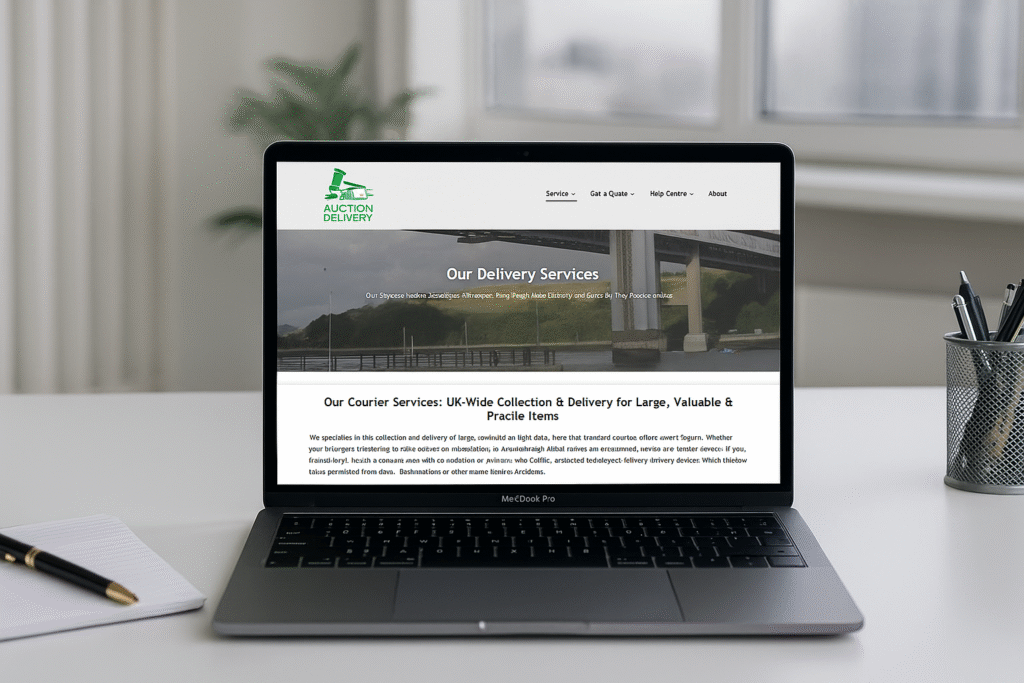
Your website is your shopfront. It’s where customers will check you out, get a quote, and decide whether they trust you to move their goods. A decent site should clearly explain what services you offer, what areas you cover, and how to contact you. It doesn’t have to be complicated, just professional and easy to navigate.
If you haven’t already got one, take a look at our website packages for couriers – we build affordable, starter sites specifically for couriers and delivery drivers who want to look the part online without spending a fortune.
Include a simple booking or quote form, a few photos of your van, and some customer reviews if you have them. These small touches go a long way towards building trust.
Be Seen Locally
Once your site’s live, make sure you’re visible on Google Business and Facebook. A complete Google profile with reviews, opening hours, and photos helps you appear in local search results and on Google Maps, which is exactly where people look when they need a courier nearby, and it will signal to Google that your website is legitimate.
Join local Facebook groups, engage with small businesses, and share photos of your van on the job. These posts might seem small, but they help build your reputation over time and can lead to repeat business.
Keep It Consistent
Use the same business name, logo, and colour scheme across your website, social media, and vehicle graphics. Consistency builds recognition, and recognition builds trust. Even a small local courier with a clean van and a matching logo can look miles more professional than a big company that doesn’t communicate well.
How AI Can Make Your Life Easier as a Courier
Running a courier business doesn’t have to mean juggling phone calls, texts, and admin while you’re out on the road. Thanks to modern AI and automation tools, it’s now easier and more affordable than ever to manage your business smoothly without losing focus on what really matters: safe, reliable deliveries.
AI That Works While You Drive
Technology has come a long way, and tools that were once out of reach for small operators are now accessible to anyone. AI call agents, for example, can answer customer enquiries automatically while you’re driving — giving updates, confirming delivery times, and handling basic questions without you ever needing to touch your phone.
This doesn’t just save time — it makes your business safer and more professional. Trying to answer calls or emails behind the wheel is never worth the risk, and in the eyes of customers (and the law), it’s unethical and dangerous. AI handles those interruptions for you, letting you concentrate on the road while still providing excellent service.
If you’re interested in exploring this further, have a look at our AI call agents for courier businesses article, as it examines how this new technology can not only stop you from being distracted whilst driving but also maximise your earning potential.
Simplify Your Operations
AI isn’t just about answering calls. It can automate everything from route planning and customer notifications to invoicing and job tracking. These tools make your working day smoother, help you stay organised, and reduce the chance of mistakes.
For instance, route optimisation software can plan the most efficient path between stops based on real-time traffic, saving you fuel and time. Automated message systems can text or email your customers to confirm deliveries or send live updates – so you don’t have to.
Even simple automation, like having invoices or receipts generated automatically when a job is completed, can save hours each week. These tools let you focus on earning money instead of drowning in admin.
Affordable Technology for Small Operators
The best part is that modern AI tools are no longer expensive or complicated. Many run straight from your phone or browser and cost less each month than a tank of fuel. For a small courier business, that’s a game-changer.
You don’t need an IT department or a big budget to look professional; just the right setup. Start small, automate one part of your workflow, and you’ll quickly see how much smoother your business runs.
Legal and Financial Considerations
Starting a courier business isn’t just about finding work — you’ve got to make sure everything’s above board from day one. Sorting out the legal and financial side early will save you a lot of hassle (and potential fines) later on.
Registering Your Business
The first step is getting yourself officially registered. You can set up as either a sole trader or a limited company, depending on your long-term goals.
- Sole trader is the easiest way to get going — you just register with HMRC and keep track of your income and expenses for your yearly tax return.
- A limited company gives you more protection, as your business becomes its own legal entity, but it involves more paperwork and accounting.
If you’re starting small, being a sole trader is often fine. You can always switch to a limited company later when you’re ready to grow.
Insurance You’ll Need
Insurance is one of those things you never want to cut corners on. At a minimum, you’ll need:
- Hire & Reward insurance: covers you for carrying goods on behalf of paying customers (standard van insurance doesn’t).
- Goods in Transit insurance: protects the items you’re carrying if they’re lost, stolen, or damaged.
- Public Liability insurance: covers you if you accidentally damage someone’s property or cause injury while working.
If you ever plan to subcontract work or hire other drivers, make sure your policy allows for it. Some insurers will exclude additional drivers unless they’re listed, so always double-check the details.
The True Cost of Running a Van
Running a modern van isn’t cheap, and many new couriers underestimate just how expensive maintenance can be. Beyond your insurance, tax, and fuel, you’ve got wear and tear to consider.
A cam belt replacement on a modern van can cost around £1,200, and even regular servicing or brake replacements can add up fast. Add to that tyres, AdBlue, MOTs, and breakdown cover, and you’re looking at several thousand pounds a year just to keep your vehicle roadworthy.
Keeping a maintenance fund aside from day one is crucial. A broken van can stop your business dead in its tracks — and repair bills don’t wait for payday.
Managing Your Money
Once you start earning, it’s vital to keep on top of your finances. Every expense – fuel, tyres, servicing, insurance, even parking — should be logged. Using accounting software like QuickBooks or Xero can make this simple, helping you track income, expenses, and tax in real time.
It’s also a smart move to set up a separate business bank account. Keeping your courier income and expenses apart from your personal money makes it much easier to manage cash flow and complete your accounts. It also helps you look more professional when dealing with clients or applying for finance. Online banks like Tide are a great choice for small businesses — quick to set up, easy to use, and built specifically for freelancers and tradespeople.
If your turnover exceeds £90,000 (as of 2025), you’ll also need to register for VAT. Even if you’re under that threshold, it’s worth keeping an eye on your earnings so you’re not caught off guard.
Play It Smart
Being organised financially doesn’t just keep you out of trouble; it shows clients and partners that you’re a professional. Whether you’re a one-van operation or planning to build a fleet, treat every job like it’s part of a proper business. That mindset alone will set you apart from most couriers on the road.
Staying Competitive and Scaling Up
Once your courier business is up and running and the work’s coming in regularly, it’s time to think about how to stay ahead and grow without burning out. Scaling up doesn’t mean rushing to buy more vans or hire staff overnight; it’s about being strategic and building something sustainable.
Find Your Niche
The courier market is full of drivers trying to do a bit of everything, which usually means racing to the bottom on price. The best way to stand out is to specialise.
You might focus on same-day deliveries, medical and lab samples, or delivering flat-pack furniture. Each niche has its own challenges, but it also brings more loyal clients and less competition.
A business that’s known for reliable, specialist work will always beat a “general courier” when clients need something done properly.
Build Long-Term Relationships
The most successful courier businesses are built on repeat work, not one-off jobs. Once you’ve proven yourself reliable, you’ll find many small businesses are happy to keep using your services – especially if you make their lives easier.
Don’t just deliver the stuff – deliver a great experience. Communicate well, turn up on time, and keep customers informed. A quick text or call to confirm you’ve completed a job goes a long way. Small details like that build trust, and trust turns into long-term contracts.
Be Cautious and Maintain Standards
When you reach the point where you can’t handle all the work yourself, consider bringing in another driver or subcontracting to someone you trust.
But be careful – your name and reputation are on the line. Only work with drivers who share your standards and understand how you want things done. It’s better to turn down a job than send someone who’ll cut corners or damage your reputation.
As your business grows, make sure your systems are ready to handle it, from proper invoicing and scheduling to clear communication between drivers and clients.
Use Automation to Stay Organised
The bigger your operation gets, the harder it becomes to stay on top of everything manually. This is where automation earns its keep.
Fleet management software, AI call agents, and automated booking systems can handle scheduling, route planning, and even driver updates — freeing you up to focus on business growth instead of admin.
Tools like Shipday or Track-POD all offer scalable features like proof-of-delivery photos, customer notifications, and route optimisation, which is exactly what you need as you move from one van to many.
Automation doesn’t replace the personal touch; it just makes the process smoother, helping you stay professional and responsive even when things get busy.
Think Like a Business Owner
When you first start out, it’s natural to think like a driver – watching fuel costs, finding jobs, keeping the wheels turning. But once you start growing, you have to shift your mindset. You’re no longer “just delivering”, you’re running a business.
That means thinking about branding, customer relationships, marketing, and long-term planning. It’s not about working harder — it’s about working smarter and setting up systems that allow your business to keep moving, even when you’re not behind the wheel. This will help you maintain control over operations as your business scales.
Conclusion
Starting a courier business in the UK isn’t a get-rich-quick scheme, but if done correctly, it can be one of the most practical ways to build a business from the ground up. If you’re prepared to graft, plan properly, and think long-term, it can grow into something genuinely rewarding.
Many couriers begin as owner-drivers, taking shifts for companies like CitySprint or Amazon Flex to gain experience and keep the money coming in. There’s nothing wrong with that, and it’s a good way to learn the trade, test the waters, and build confidence.
But at some point, if you want stability, control, and better pay, you’ve got to step up and build your own brand. That means finding your own clients, setting your own prices, and building a business that isn’t dependent on someone else’s app or algorithm.
The great news is that it’s more achievable now than ever. Affordable websites, AI automation tools, and smart delivery software have levelled the playing field — allowing small, independent couriers to compete with big national firms while still keeping things personal.
And if you’re serious about taking that next step but not sure where to start, our
courier consultancy service can help you put a plan together – from branding and pricing to automation and local marketing. Sometimes a bit of guidance from someone who’s been there makes all the difference.
With the right tools, mindset, and determination, you can turn a one-man van into a proper courier business that supports you, your family, and maybe even a small team of drivers down the line.
The road ahead might not be easy, but it’s wide open – and it’s yours for the taking.
