Courier Driver Fatigue: How to Stay Safe on Long, Monotonous Runs

Driver fatigue is one of the biggest hidden risks in courier work. The worrying part is how normal it can start to feel until it suddenly isn’t. If you’re new to the industry, it’s worth understanding this side of the job early on. Long hours and constant driving are part of the reality, which is why learning how to manage fatigue properly is just as important as learning how to start a courier business in the first place.
Long hours, repetitive roads, poor sleep, bad food, stress and the temptation to “just push on a bit further” can all combine to create a seriously dangerous situation behind the wheel. This is one area where being honest with yourself could save your life, and somebody else’s.
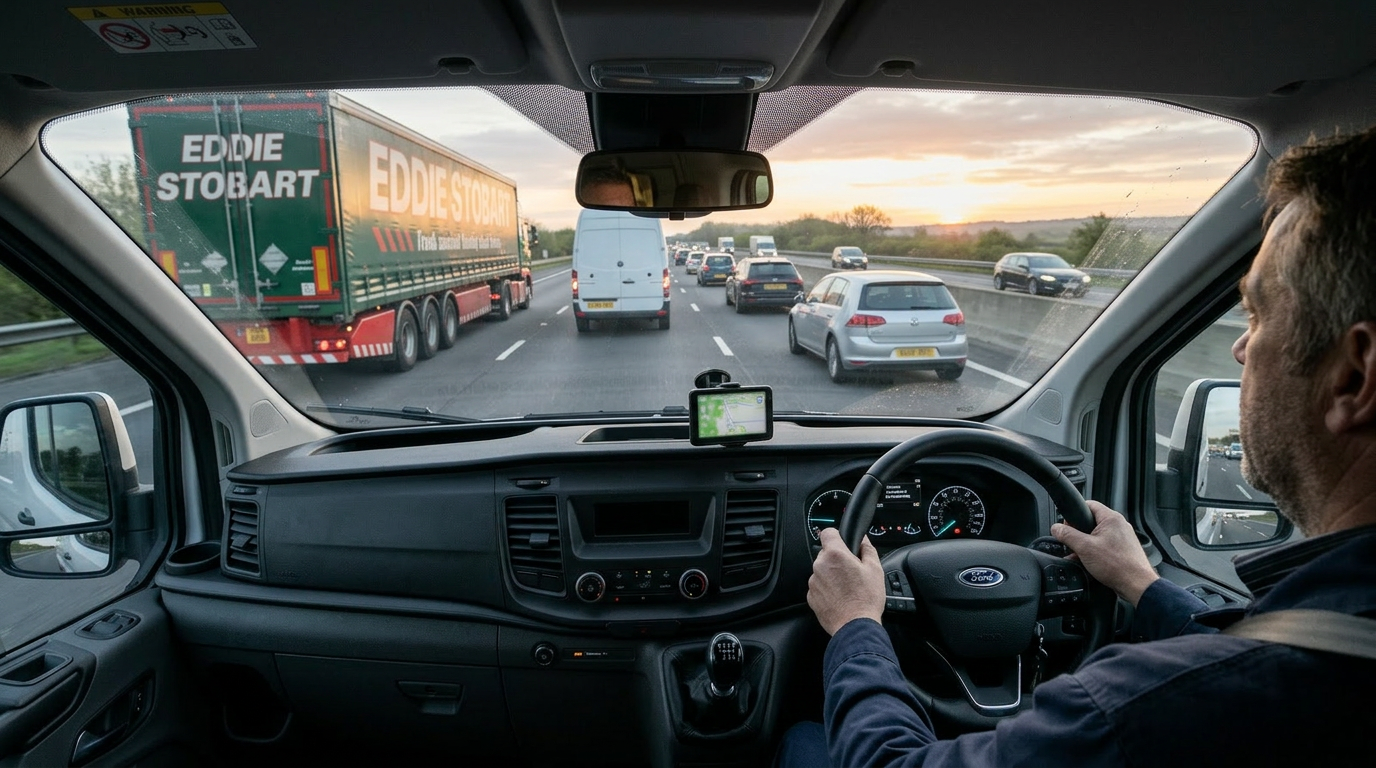
Driver fatigue is one of those things a lot of courier drivers know is dangerous, but plenty still underestimate. The problem is, tiredness does not always arrive like a dramatic warning light. Sometimes it creeps in slowly on a long motorway stretch, after a poor night’s sleep, a heavy lunch, or a week of overdoing it.
By the time you realise you are properly struggling, you may already be driving far below your best. Fatigue slows reaction times, affects concentration and judgement, and in the worst cases can end with the driver literally falling asleep at the wheel. In the UK, RoSPA says there were around 1,300 injury collisions linked to driver fatigue in 2022, while fatigue may be a contributory factor in up to 20% of road collisions and up to a quarter of fatal and serious crashes. These crashes are also more likely to end in death or serious injury because a sleeping driver does not brake or swerve.
Warning signs you should not ignore
- Heavy eyelids or frequent yawning
- Missing road signs or sat-nav directions
- Drifting in your lane
- Struggling to remember the last few miles
- Turning the music up or opening the window to try and force yourself to stay awake
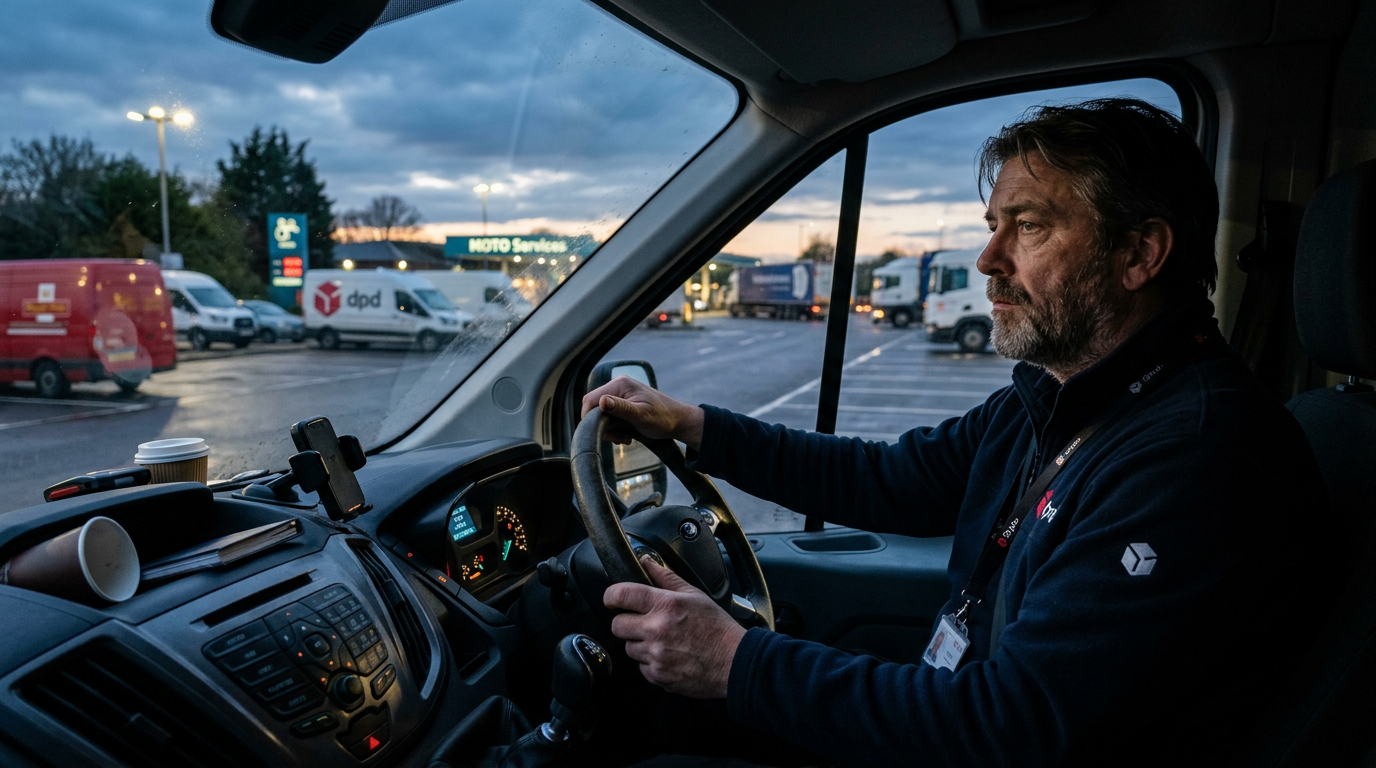
For couriers, the risk is obvious. Long miles, early starts, pressure to get the job done, boring stretches of road, service station food, and the temptation to push on when you should really stop. The Highway Code is clear on this: do not start a long journey if you are tired, avoid long journeys between midnight and 6am where possible, and take at least a 15-minute break every two hours of driving. If you feel sleepy, stop somewhere safe.
Why driver fatigue is such a big problem for couriers
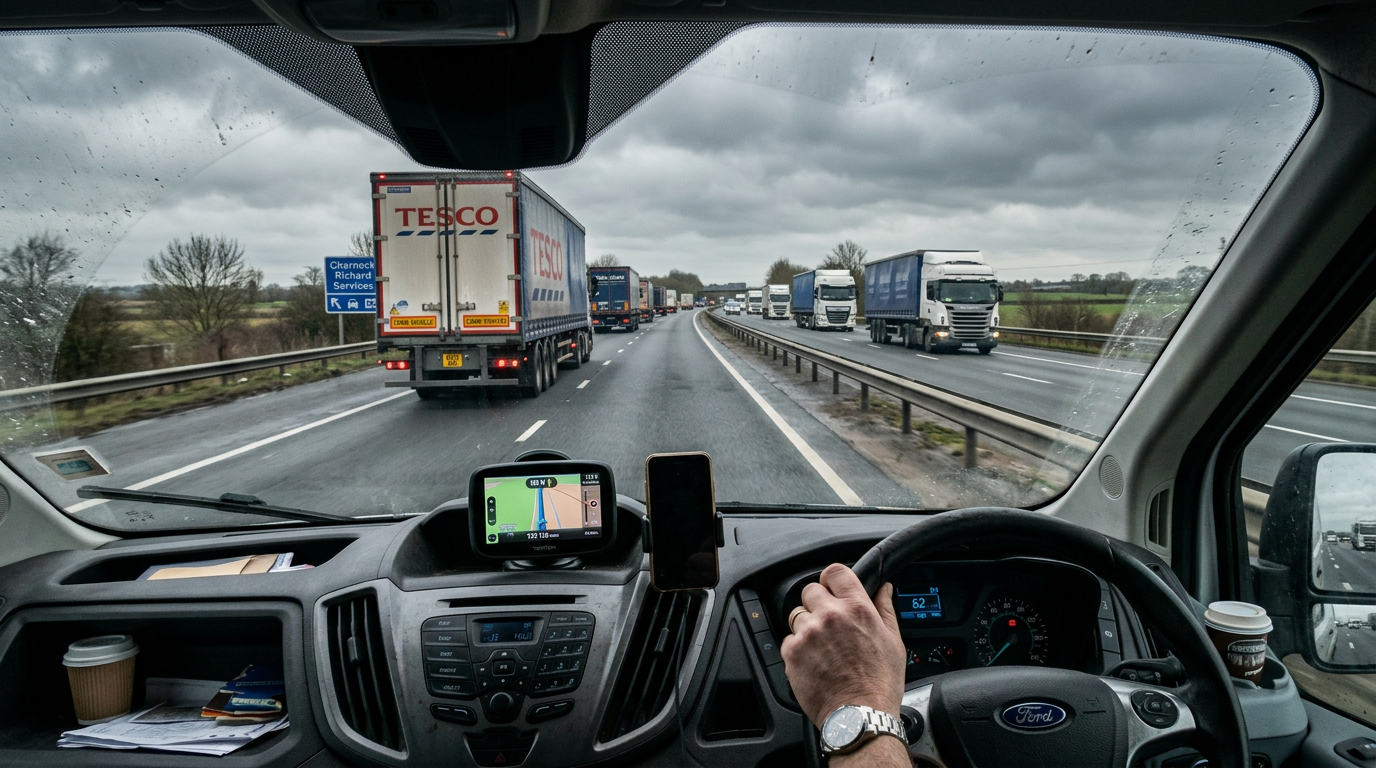
Fatigue hits courier drivers harder than some people realise because the job itself creates the perfect conditions for it. Long, repetitive roads. Early collections. Late finishes. Sitting down for hours. Eating whatever is quick and easy. Not moving much. Then add stress, money worries, poor sleep, or health issues in the background, and it is easy to see how things can start going wrong.
RoSPA notes that fatigue-related crashes are especially likely on long journeys on monotonous roads, between midnight and 6am, between 2pm and 4pm, after less sleep than normal, and after long working hours.
There is another uncomfortable truth here as well. Many drivers know they are tired, but still keep going. RoSPA explicitly says drivers are generally aware when they are sleepy, which means there is often a conscious decision being made to continue instead of stopping. That is why fatigue can be such a dangerous subject. It is not always about not noticing. Sometimes it is about convincing yourself you will be alright for another half hour.
Start with the obvious: proper sleep
I know this sounds basic, but proper sleep has to be the foundation. There is no supplement, coffee, energy drink, loud music or open window that properly replaces sleep. The Highway Code tells drivers to get sufficient sleep before a long journey for a reason.
This matters because a lot of working drivers kid themselves that they are fine on four or five hours. Some may cope better than others for a while, but that does not mean they are driving safely. Tiredness often shows up first in slower reactions, wandering concentration, poor lane discipline, missing signs, and taking longer to process what is happening around you. By the time your eyelids are going, you are already well past the point where your driving has been affected.

Sleep apnoea, weight, and hidden health problems
This is the bit a lot of drivers ignore, and it is a big one.
If you are overweight, do not exercise, eat poorly, snore heavily, wake up unrefreshed, or feel exhausted in the day even after being in bed all night, you should not just shrug it off as “part of the job”. Obstructive sleep apnoea is a serious condition that can leave people extremely sleepy during the day. NHS guidance lists symptoms such as loud snoring, breathing stopping and starting during sleep, and feeling very tired or struggling to concentrate during the day.
This is especially important for drivers because the legal side matters too. If sleep apnoea is confirmed, you must not drive until symptoms like excessive tiredness are under control. So if you are regularly fighting sleepiness behind the wheel, that is not something to “man up” and push through. It is a warning sign. Get checked.
Courier reality check
If you are regularly getting sleepy at the wheel, that is not toughness. It is a serious warning sign that something needs sorting.
My own experience with fatigue behind the wheel
I know this subject first-hand. Years ago, when I was doing courier work before, I was in terrible shape. I was unhealthy, barely exercised, had sleep apnoea, lived on junk food, and used sugary energy drinks to try and drag myself through the day. At one point, I was knocking back four or five large cans a day just to stay alert.
The reality was grim. I would struggle to drive for more than an hour or two before that heavy, sleepy feeling started coming over me. Looking back, I was a danger to myself and other people. At the time, you tell yourself you are coping. You tell yourself everyone in transport does it. You tell yourself the next can or the next stop will sort you out. It does not.
A health scare in my mid-forties finally made me face up to how badly I had let things slide. I stopped driving for years, started cycling every day, gave up smoking, ditched the sugary drinks, cleaned my diet up massively and became far more active.
What changed for me
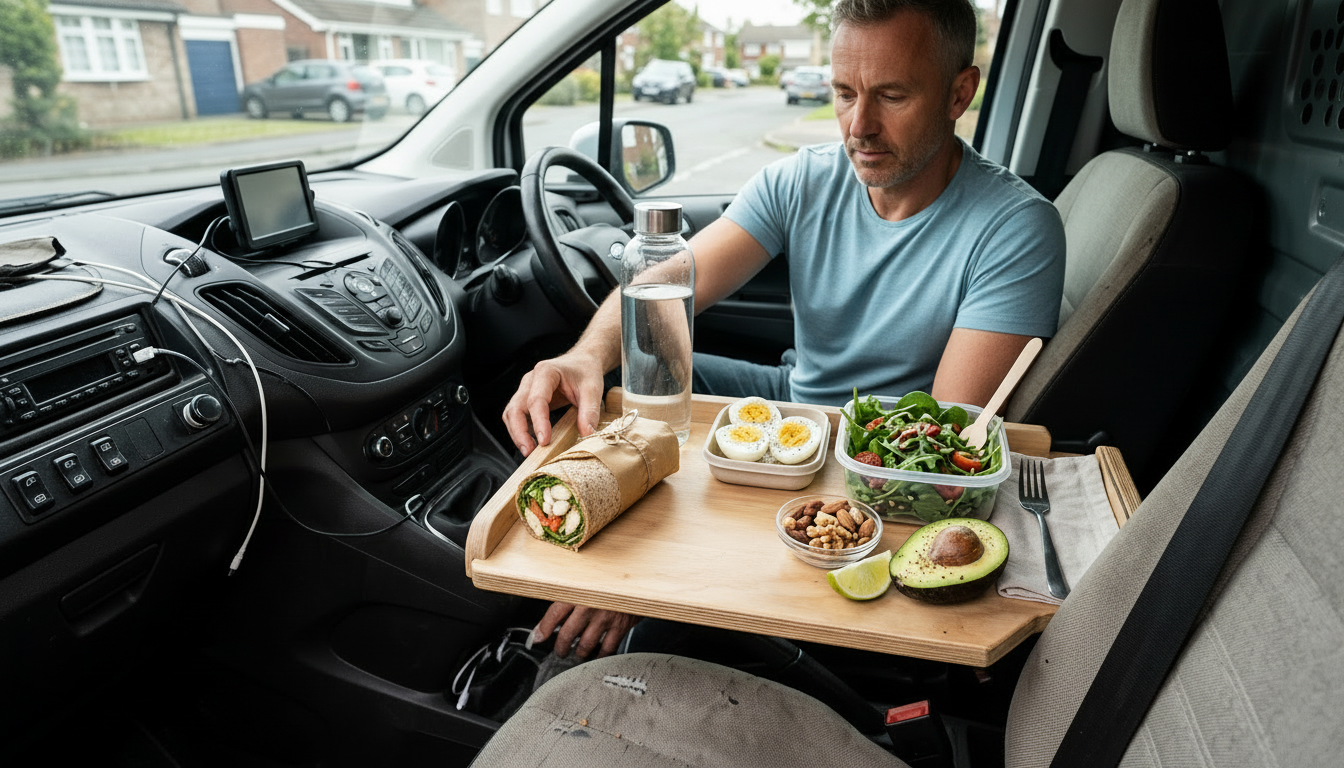
These days, I keep things much simpler and much healthier. I stay active. I drink water, not fizzy rubbish. I keep fast food to an occasional treat instead of a daily habit. I eat in a fairly tight window, mostly midday to early evening, and my meals are usually based around things like eggs, wraps, olive oil, avocado, rocket, nuts and green salads rather than processed grab-and-go junk.
That routine will not suit everybody exactly the same way, but the bigger point is this: when you improve your overall health, driving fatigue becomes far easier to manage. NHS advice on tackling fatigue also points to basics like sleeping well, being more active, losing excess weight where needed, eating well, reducing stress, and cutting back on caffeine.
You do not need to turn into some elite athlete overnight. You just need to stop treating your body like a skip and expecting it to perform like a machine.
The biggest mistake: trying to beat fatigue instead of stopping
One of the worst habits drivers get into is trying to outsmart tiredness. Loud music. Window open. Heater off. More energy drink. Another cigarette. A bag of sweets. None of that is a real fix.
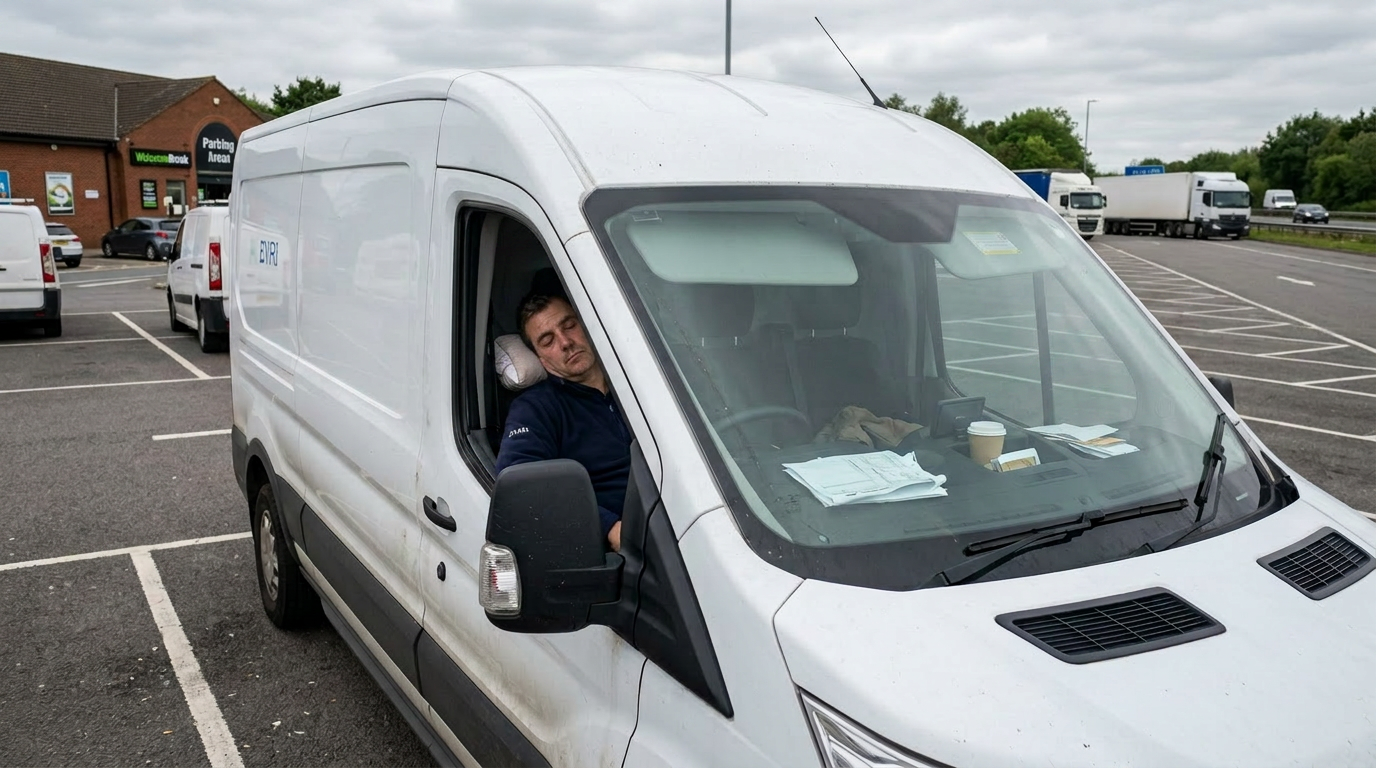
The safest response to sleepiness is simple: stop driving safely and rest. For me, if I do start to feel tired these days, I pull over as soon as possible and have a 20 to 40 minute power nap. That usually sorts me right out.
What actually helps
- A proper night’s sleep before a long run
- Planned stops every two hours
- A short nap when tiredness hits
- Walking, stretching or squats at services
- Water, sensible food and honest self-awareness
Movement helps more than people think
Another thing that helps a lot is getting your body moving when you stop.
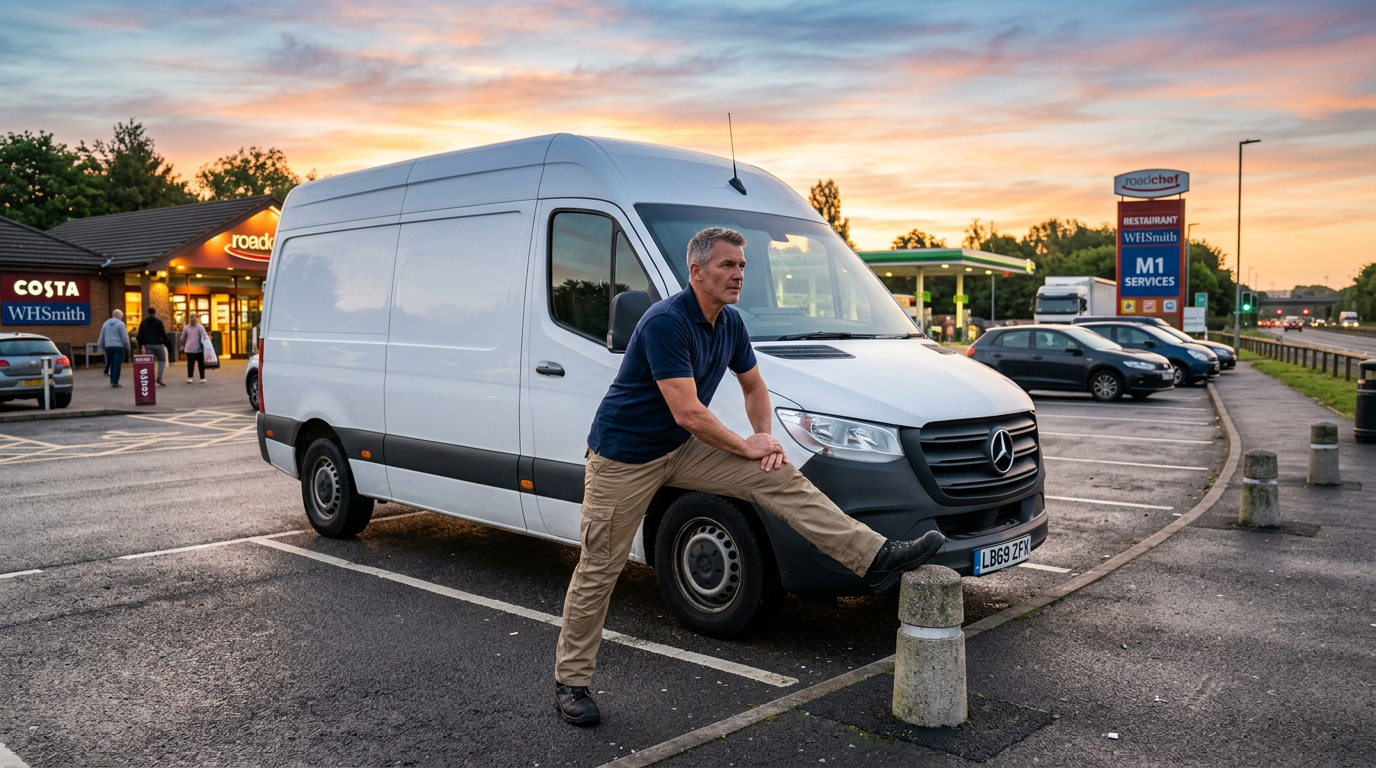
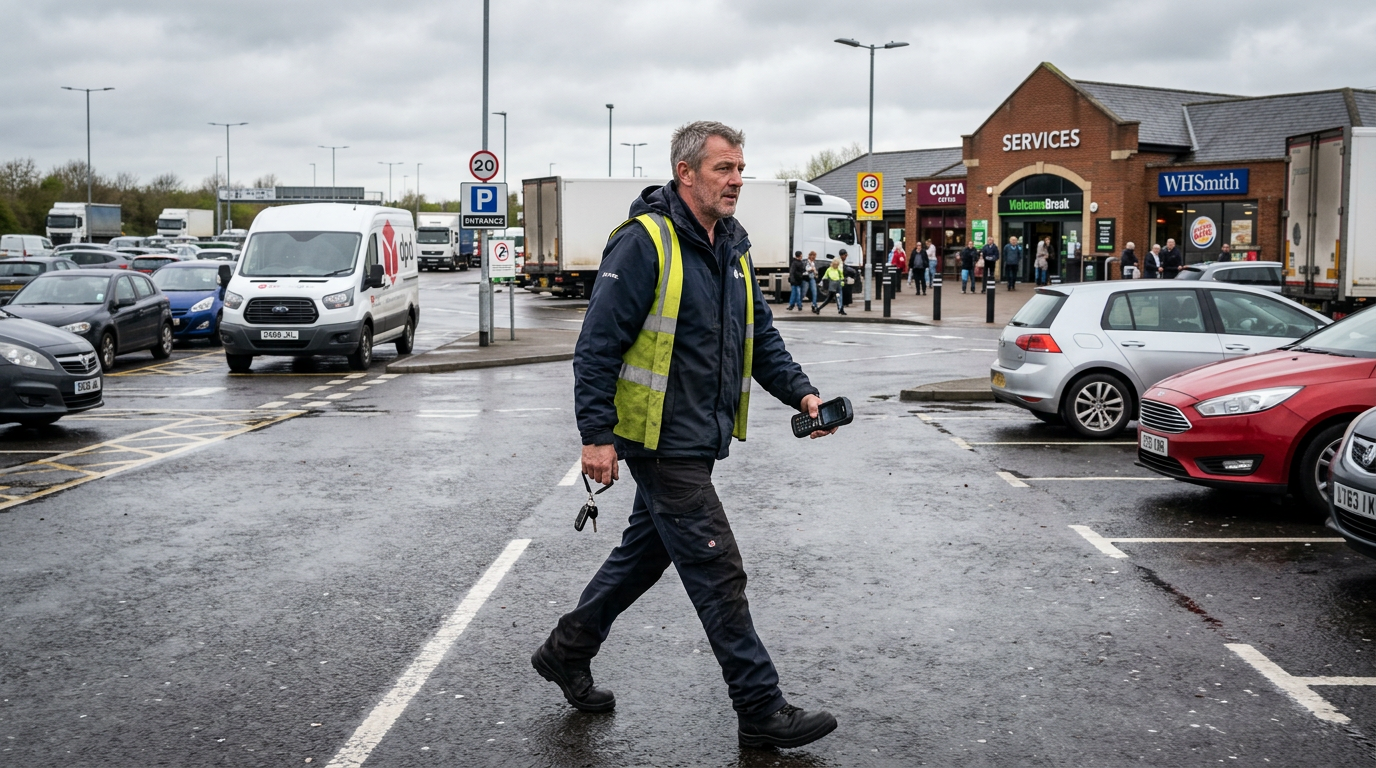
That could be as simple as parking at the far end of the services and walking briskly for five minutes. If you have room in the back of the van, do a few squats, some press-ups against the bodywork, or a quick stretch. It sounds like faffing about, but it genuinely helps wake you up and break the fog of sitting still for hours.
I have even started carrying a folding bike in the van. If I have time and the weather is decent, I will find a quiet spot and go for a quick 10-minute spin. I know not everyone can do that, but the main idea still stands: move your body.
Food and drink matter more than most drivers admit
A lot of courier drivers eat and drink in a way that almost guarantees an energy crash later on. Massive fry-ups, pastries, sweets, chocolate, sugary drinks, too much caffeine, then hardly any water. It gives you a short-lived buzz followed by a slump, and it can wreck your sleep later as well.
For drivers, the practical takeaway is pretty simple: eat like a grown-up, keep hydrated, and stop treating energy drinks like a substitute for rest.
What about coffee, caffeine and energy drinks?
Caffeine does have a place, but it needs to be understood properly. There is evidence that caffeinated substances are associated with a lower crash risk in long-distance commercial drivers, and road-safety guidance notes that caffeine may reduce crash risk in the short term. But caffeine is a temporary aid, not a solution.
So yes, a coffee can help buy you time. No, it is not a licence to keep driving while dangerously tired.
Personally, I would take proper sleep, good routine, hydration, movement, and the discipline to stop over relying on cans of sugary stimulant junk every day. That habit nearly wrecked me.
Creatine and supplements: useful tool or overhyped distraction?
Creatine is one of the better-researched supplements in sports nutrition, but most of that evidence is about high-intensity exercise performance, not motorway driving. There is some emerging research suggesting creatine may help certain aspects of cognitive performance during sleep deprivation, but that does not mean it solves driver fatigue, replaces sleep, or makes it safe to drive when you are exhausted.
As for other supplements often talked about for focus, energy or fatigue, the evidence is much patchier. My own view is that supplements should sit right at the bottom of the list. First, get your sleep right. Then your health. Then your routine. Then your breaks. Then your hydration. Then your discipline. Only after that should you even start worrying about powders and capsules.
Old habits are hard to break, but the stakes are too high
As a professional driver, you have a duty to other people on the road, not just yourself. That means being honest about how you’re feeling and living. Maintaining a healthy lifestyle as a courier should be a priority.
Poor diet, excess weight, inactivity, smoking, rubbish sleep and living on highly processed food and sugary drinks can all leave you feeling rough, sluggish and sleepy. Over time, they can also feed into bigger problems like insulin resistance, type 2 diabetes, heart issues and sleep-disordered breathing.
I am not pretending to be perfect. I still enjoy a drink in the evenings or at weekends. But moderation matters, and so do the little habits. I will take the stairs. I will park further away. I will walk or cycle to the shops instead of jumping in the car for a one-mile trip. Those things sound minor, but over months and years, they add up.
The bottom line
Driver fatigue is not something to blag your way through. It is one of the most dangerous parts of courier work because it can creep up gradually, feel manageable right up until it is not, and turn catastrophic in seconds.
So the rule is simple.
Get proper sleep.
Take fatigue seriously.
Do not ignore signs of sleep apnoea or excessive daytime sleepiness.
Plan breaks before you need them.
Use caffeine as a short-term aid, not a crutch.
Move your body when you stop.
Eat and drink like your life depends on it.
And if you feel sleepy, pull over safely and sort it out straight away.
No delivery is worth a funeral.
Sources
- RoSPA: Driver fatigue factsheet
- The Highway Code: Rules for drivers and motorcyclists
- NHS: Sleep apnoea
- NHS: Self-help tips to fight fatigue
- Study: Naps and caffeine as countermeasures for sleepiness
- BMJ: Caffeinated substances and crash risk in long-distance drivers
- NIH ODS: Exercise and athletic performance supplements
- Nutrients: Creatine supplementation and cognitive performance under sleep deprivation