Is It Worth Using an Illegal E-Bike for Delivery?

Illegal e-bikes are now a common sight in many UK cities, especially among food delivery riders. But is using one actually worth the risk?
This article looks at why riders use them, what the law says, what the consequences can be, and why legal alternatives are usually the smarter long-term choice.
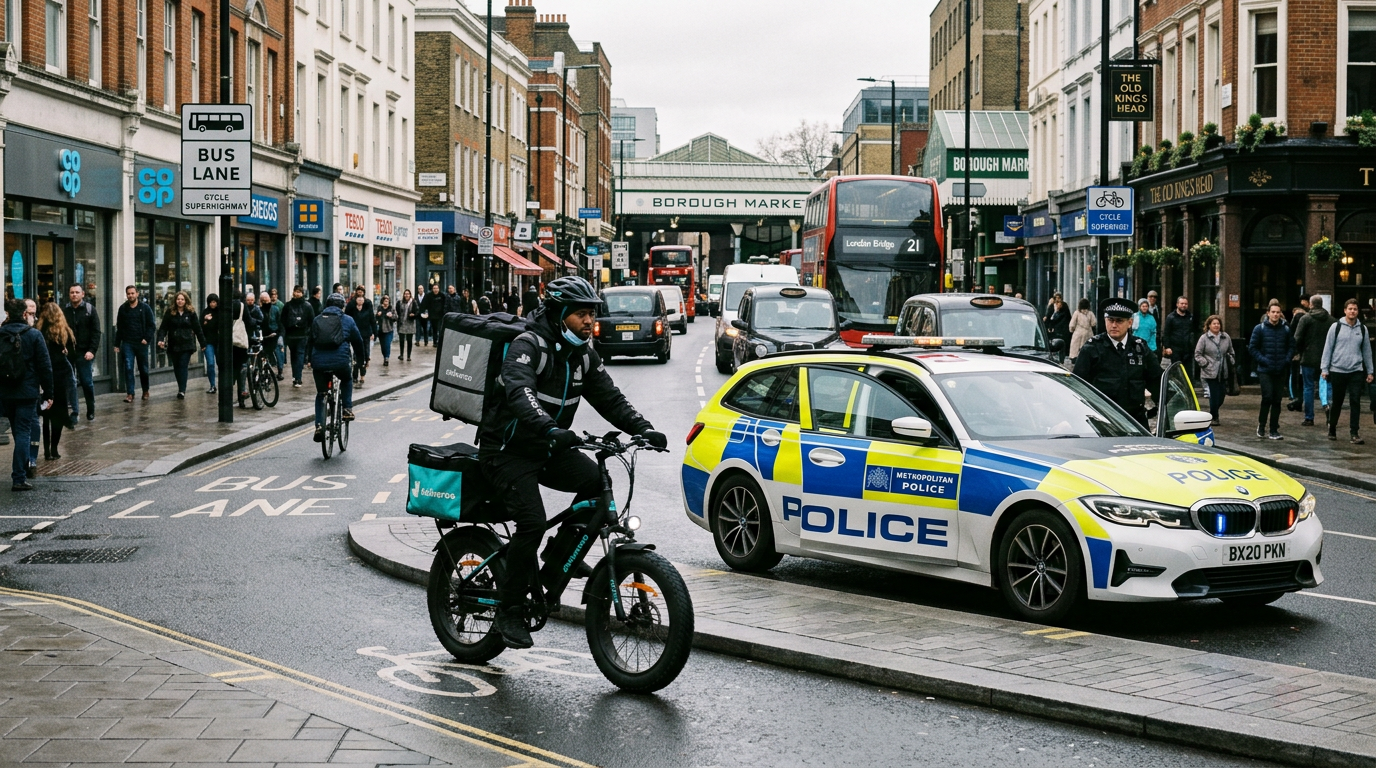
If you spend any time in a major British city, especially London, Manchester, Birmingham or Bristol, you’ll quickly notice something: there are a lot of illegal e-bikes being used for food delivery.
Some are subtle. Others are effectively electric mopeds disguised as bicycles, flying along at 30mph with throttle-only power, often with no registration, no insurance, no proper lights, and sometimes very little regard for pedestrians or other road users.
This is a tricky subject because it needs balance. Illegal e-bike use is clearly against the law, but pretending it is not happening on a massive scale does not help anyone either.
What actually counts as an illegal e-bike in the UK?
Under UK rules, a road-legal electrically assisted pedal cycle, or EAPC, must have pedals that can propel it, a motor with a continuous rated power output of no more than 250 watts, and motor assistance that cuts out at 15.5mph. GOV.UK also explains that compliant EAPCs do not need vehicle tax, registration or insurance. You can read the official electric bike rules here.
Once a bike goes beyond those limits, it may legally be treated as a motor vehicle rather than a bicycle. That can mean it needs registration, insurance, a licence, and compliance with wider road vehicle rules.
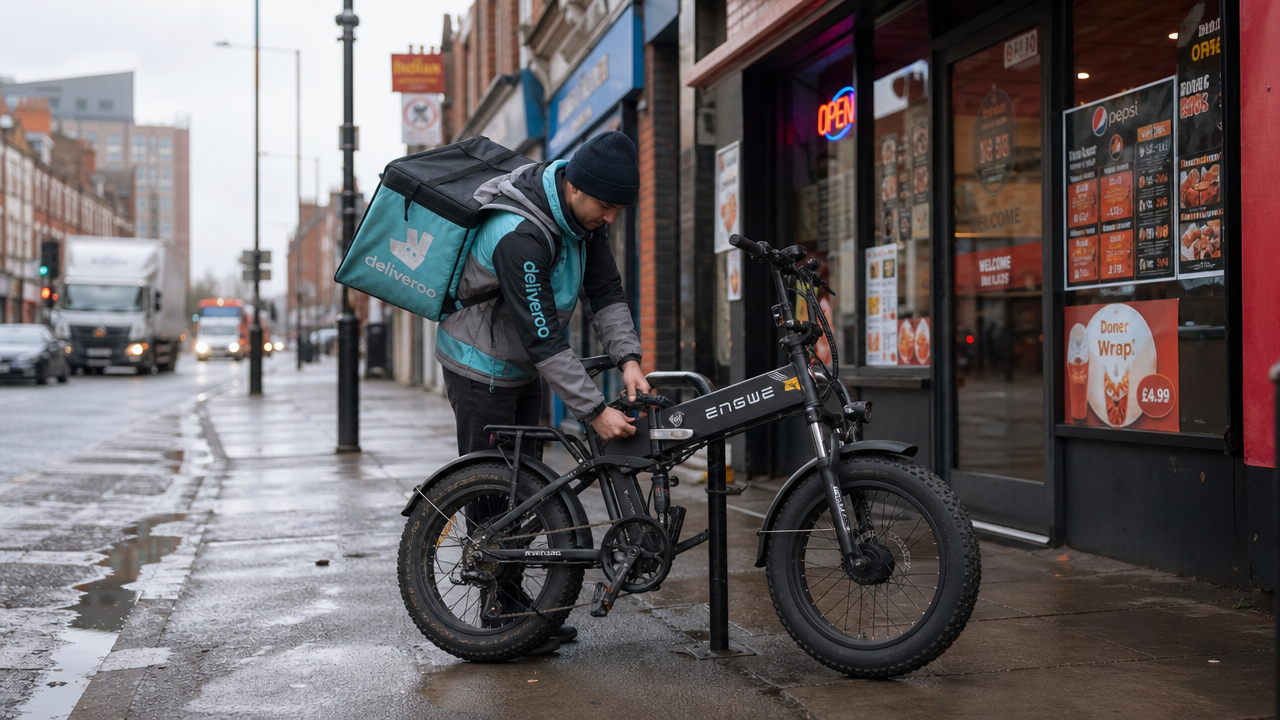
A lot of the bikes being used for delivery work simply do not comply. Some have throttles that work without pedalling, powerful motors well above 250W, or top-assisted speeds far beyond the legal 15.5mph limit.
Why do delivery riders use illegal e-bikes?
The simple answer is that they can make the job easier and potentially more profitable.
Food delivery work is often based around speed, volume, and efficiency. The faster a rider can move between restaurants and customers, the more orders they may be able to complete.
A high-powered illegal e-bike can reduce fatigue, make hills easier, maintain a higher average speed, and help a rider keep up with traffic. For someone doing long food delivery shifts in a busy city, the temptation is obvious.
This doesn’t make it acceptable, but it does explain why the problem has grown.
Why are there so many in British cities?
Part of the reason is enforcement, or at least the perception of enforcement.
I recently drove from North to South London on a Saturday night and was genuinely shocked at the number of badly ridden, illegal e-bikes on the road. Loads were being used with throttles, and quite a few didn’t even have lights on, with riders wearing dark clothing. I narrowly missed one when I turned left as he undertook me at speed.
In many cities, riders using throttle-only bikes and fast conversions can seem to operate openly. You also see privately owned e-scooters being used regularly, even though they are not legal for general private use on public roads.
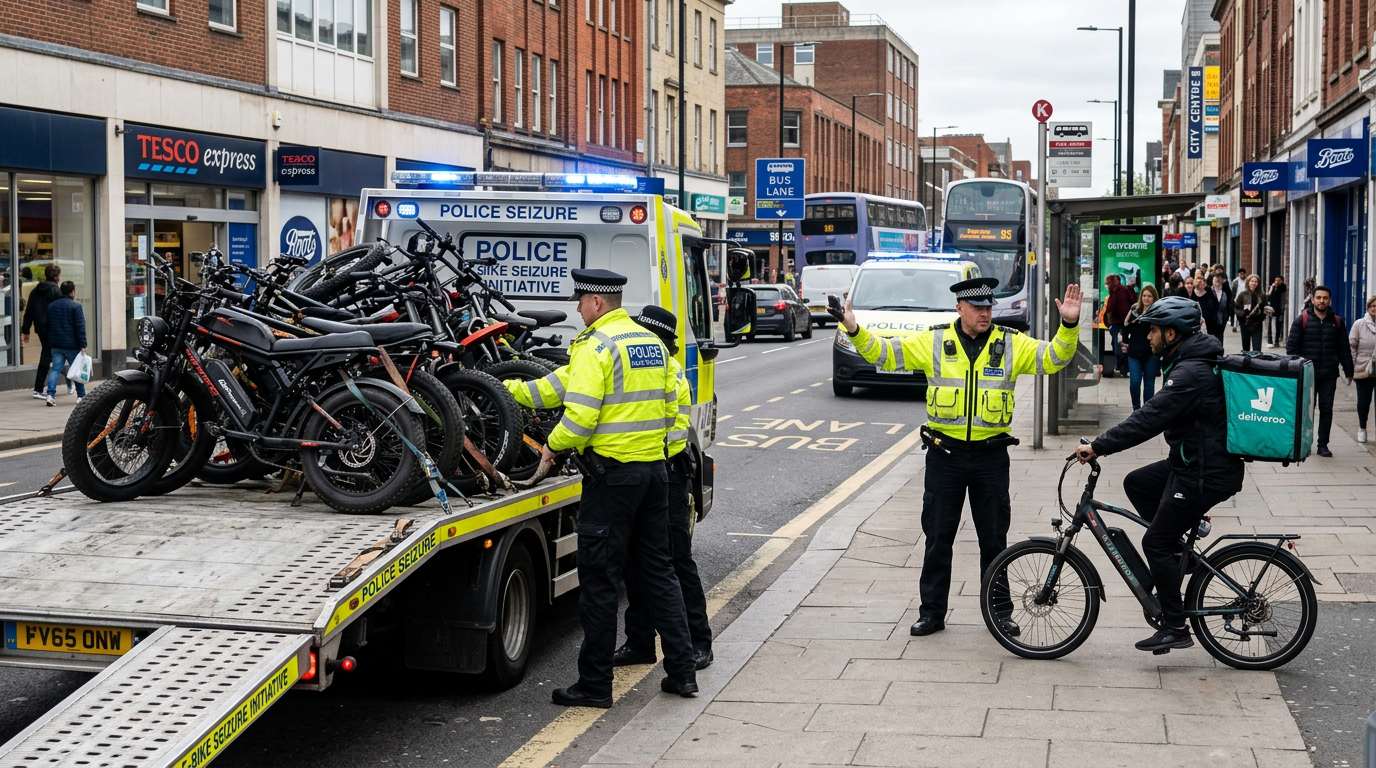
To be fair, police do run operations and seizures. The Met reported seizing 52 illegal e-bikes and mopeds during a two-day operation in 2026. But day-to-day enforcement can still feel patchy from the outside. The Met’s enforcement update is a useful example.
Cheap kits make the problem worse
Another reason illegal e-bikes are everywhere is cost.
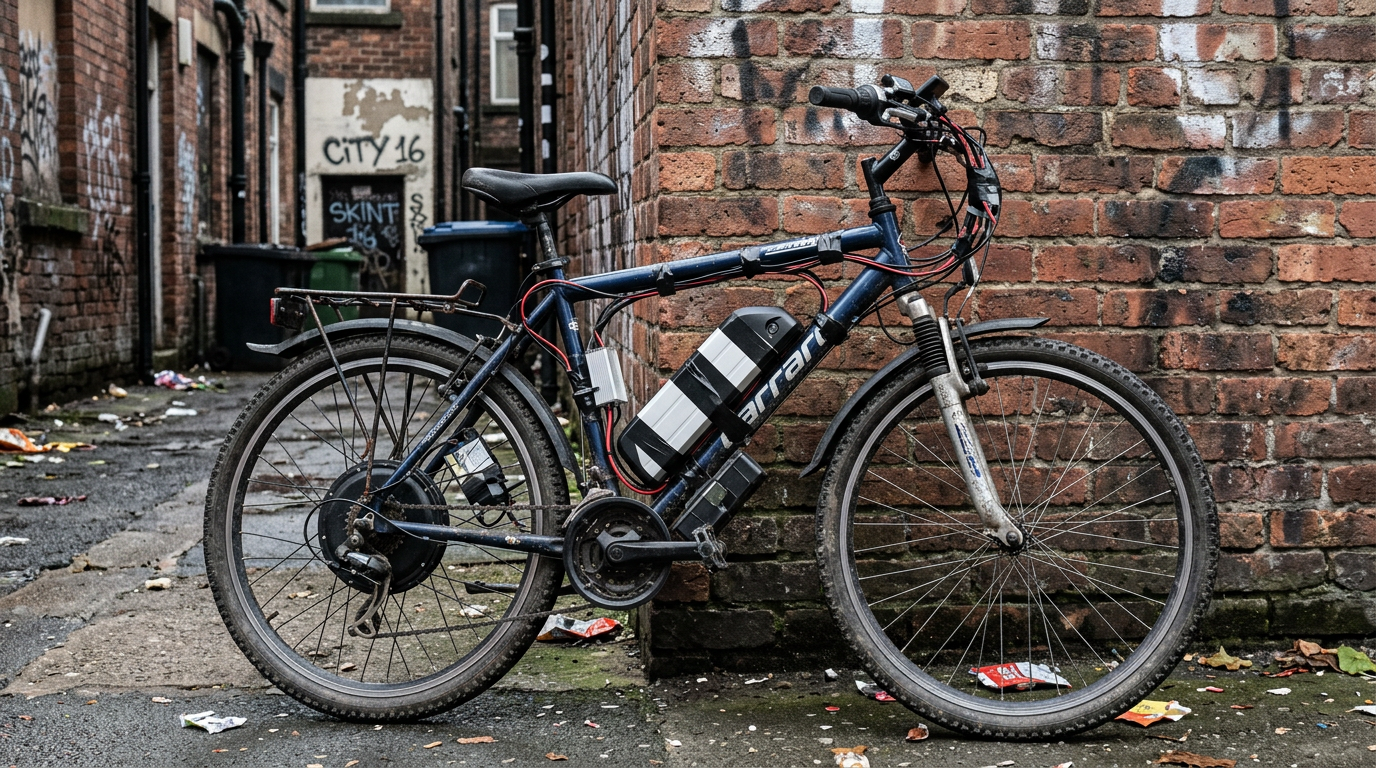
A cheap conversion kit and battery can be bought for a relatively low price compared with a legal moped or proper commercial vehicle setup. Some riders are fitting high-powered kits to low-end second-hand bikes, sometimes for around £500 to £800 all in.
From their point of view, if the bike gets seized by the police, they’ll build another. A lot of these riders don’t have a driving licence in the first place, so they feel they have nothing to lose.
Again, that does not justify it. But if we want to understand why the issue keeps growing, the low barrier to entry is a big part of it.
The legal consequences can be serious
This is where the risk becomes much bigger than most riders probably realise.
If an illegal e-bike is treated as a motor vehicle, then riding it without insurance or the proper license can become a serious matter. If there is a crash, especially one involving a pedestrian, cyclist, or other road user, things can escalate very quickly.
Possible offences could include no insurance, driving otherwise than in accordance with a licence, careless driving, dangerous driving, or using a vehicle in a dangerous condition.
If someone is killed, the consequences can be life-changing. The Sentencing Council states that causing death by dangerous driving can carry a maximum sentence of life imprisonment for offences committed after 28 June 2022. See the Sentencing Council guidance here.
This is not just a fine-and-forget risk
- Your bike could be seized
- You could face points, fines, or prosecution
- You may be uninsured if there is a crash
- A serious injury or fatality could lead to a major criminal case
The ethical side matters too
One of the biggest traps in delivery work is thinking, “everyone else is doing it.”
But just because something is common does not make it right. Illegal e-bikes can put pedestrians at risk, cause problems for legitimate cyclists, and damage the reputation of delivery riders generally.
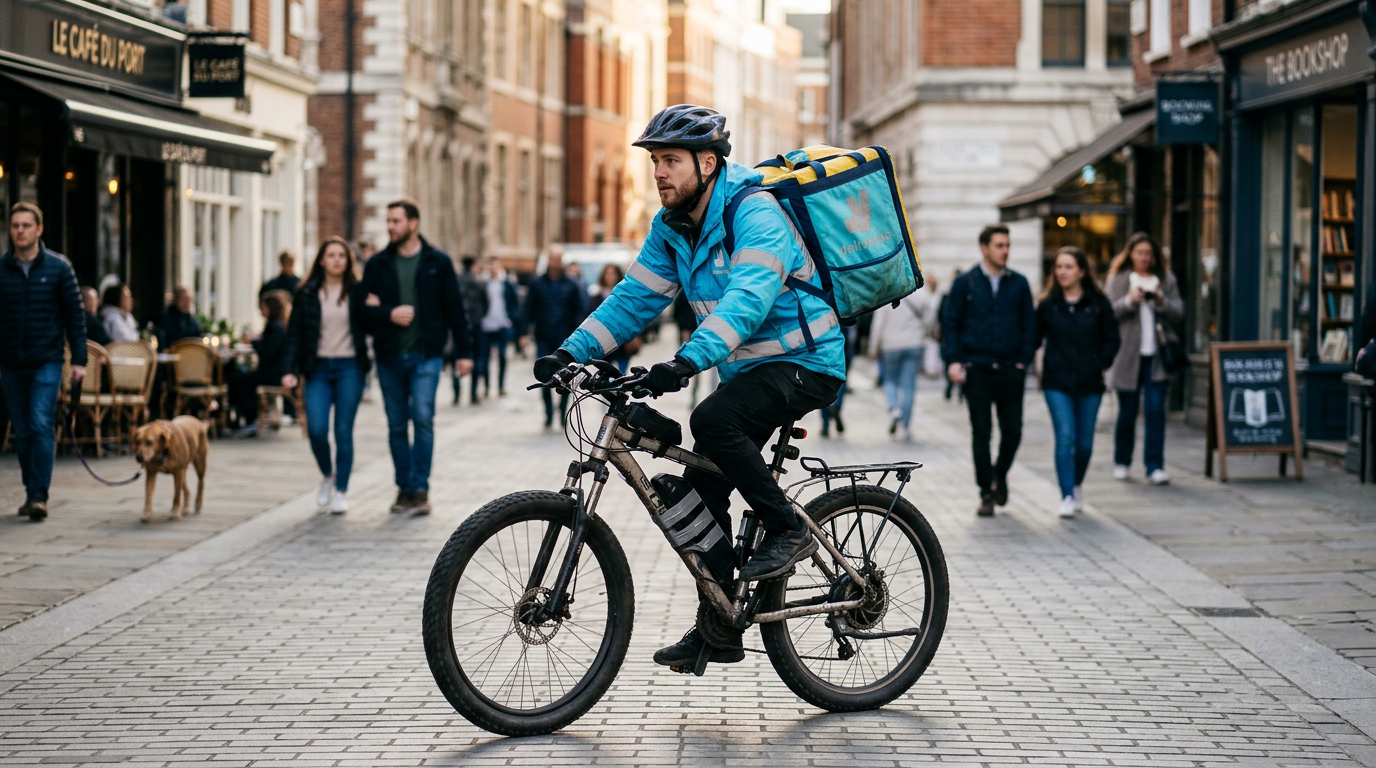
There is also a fairness issue. Riders using legal 250W e-bikes are competing against people using what are effectively unregistered electric mopeds. That creates a race to the bottom, especially if platforms reward speed and volume without properly checking how the work is being done.
What about delivery platforms?
There is growing pressure on delivery platforms themselves to take more responsibility for the bikes riders are using. Recent press reports and political discussions have suggested that food delivery companies may face increasing pressure to clamp down on illegal e-bikes being used on their platforms.
Whether that leads to meaningful enforcement is another question entirely. Several delivery companies have publicly said riders are expected to follow UK road laws, and some have said they will investigate or remove riders found using illegal vehicles. Critics argue that real-world checks still appear inconsistent.
There is also a wider question about incentives. If delivery apps reward speed and high delivery volume, some riders will feel pushed toward faster machines, even if those bikes are not legal.
Would a moped make more sense?
In many cases, yes.
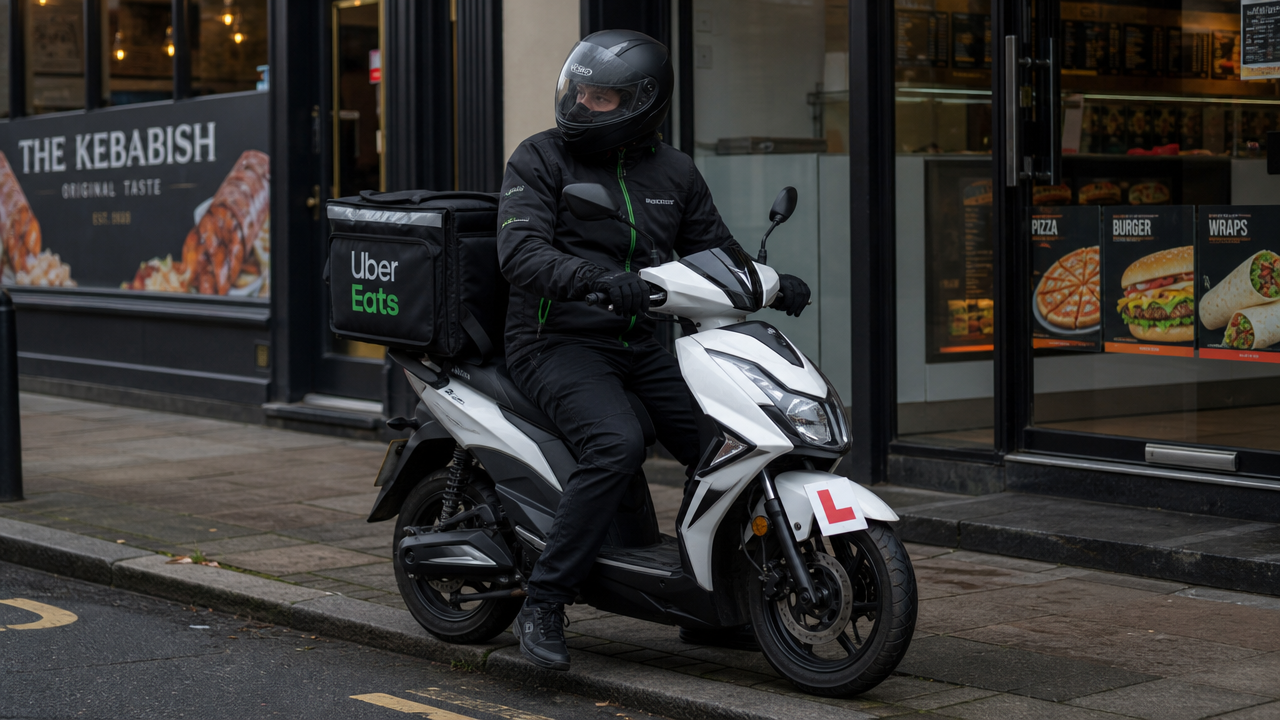
If someone genuinely needs 30mph capability, throttle power, longer range, and the ability to work long shifts, then a properly insured and legal moped may be the more sensible option.
It means getting a provisional licence, completing CBT, wearing the correct kit, and paying for insurance. That is more hassle and more expense upfront, but it also means you are operating legally.
If you want to earn from delivery work without risking an illegal setup, it is worth looking at safer options. Our guide to the best delivery side hustles in the UK covers more legal ways to get started.
Can you still make money legally on an e-bike?
Yes, but you need to be realistic about the type of work.
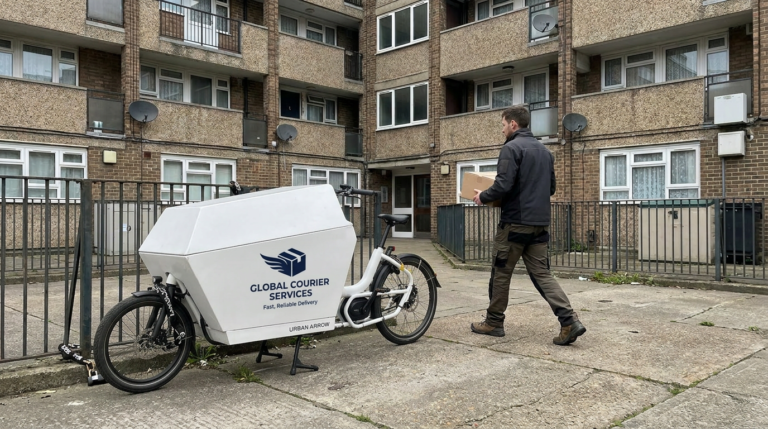
A legal e-bike can work well for food delivery, short urban courier jobs, and some dense city routes. Cargo bikes can also be useful for certain types of parcel delivery, especially where routes are planned around small parcels and short distances.
The key is matching the vehicle to the job. A legal 250W e-bike will not behave like a moped, and it should not be expected to. But for the right urban work, it can still be a good low-cost delivery option.
For more on that side of things, read our guide: Can you do multi-drop parcel delivery on an e-bike?
Could there be a major crackdown?
Possibly, but I would not bet the house on it happening overnight.
As illegal e-bike numbers continue to rise, pressure is increasing from pedestrians, councils, road safety campaigners, and the media. If there are more high-profile accidents, especially involving pedestrians, enforcement could tighten quickly.
The problem is that illegal e-bike use is now so widespread that enforcement would need to be consistent, not just occasional. Regular “purges” might look good in local press releases, but unless they are followed up properly, riders quickly go back to normal.
At the moment, it often feels like many riders do not believe they will be stopped. That perception is part of the problem.
What needs to happen?
There is probably no single fix, but a few things would help.
- Consistent enforcement: not just occasional operations for publicity.
- Platform responsibility: delivery apps need clearer checks on vehicle legality.
- Better legal options: affordable mopeds, cargo bikes, and properly regulated urban delivery vehicles.
- Clearer public guidance: many riders still do not fully understand what makes an e-bike legal.
- Safer infrastructure: better cycle lanes and delivery zones would reduce conflict with pedestrians and traffic.
The difficult bit is that many riders are not trying to cause trouble. They are trying to earn a living. But that does not remove the risk to others, or the legal consequences if things go wrong.
Final thoughts
So, is it worth using an illegal e-bike for delivery work?
Personally, I would say no.
I understand why people do it. The earning potential, reduced fatigue, and practicality in congested cities are obvious. And clearly, thousands of riders are already doing exactly that.
But the legal and ethical risks are real. What starts as “just making deliveries” can quickly become something much more serious if there is an accident, especially when uninsured high-powered bikes are involved.
At the end of the day, most riders are simply trying to earn a living. The problem is that the current situation feels increasingly unsustainable, with enforcement, regulation, and real-world behaviour all pulling in different directions.
Until something changes, illegal e-bikes in UK delivery work probably are not going away anytime soon. But that does not mean using one is worth the risk.