Can You Do Multi-Drop Parcel Delivery on an E-Bike?

E-bikes and cargo bikes are starting to appear in urban delivery networks across the UK. But can they actually handle proper multi-drop parcel work?
There’s been a lot of talk recently about parcel companies experimenting with e-bikes and cargo bikes for urban deliveries. With congestion, rising fuel costs, and tighter emissions rules in city centres, it’s not hard to see why.
Why parcel companies are looking at e-bikes
Large delivery companies are under pressure from multiple directions:
- Congestion in city centres
- Clean Air Zones and ULEZ expansion
- Rising fuel costs
- Demand for faster deliveries
E-bikes and cargo bikes solve a lot of these problems. They can move through traffic, avoid parking issues, and operate at a much lower cost than vans.
In fact, cargo bikes are already being used for last-mile delivery in cities, with pilot schemes and partnerships rolling out in places like London.
The difference between an e-bike and a cargo bike
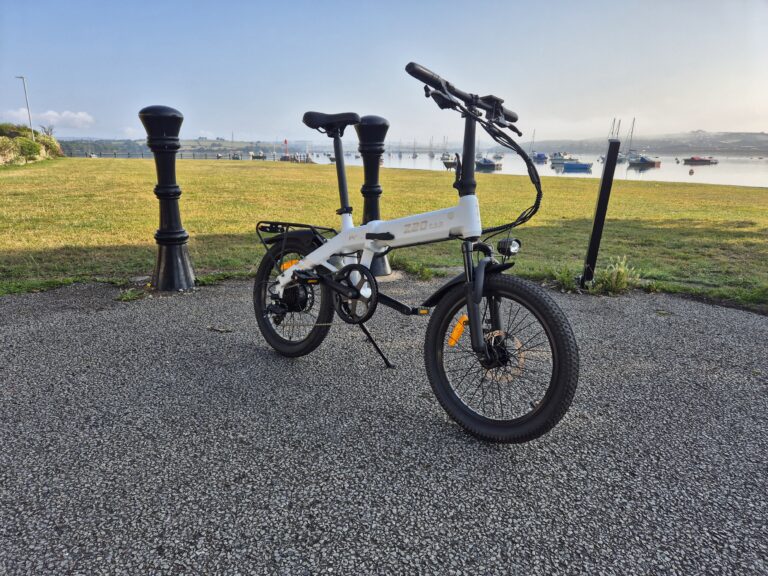
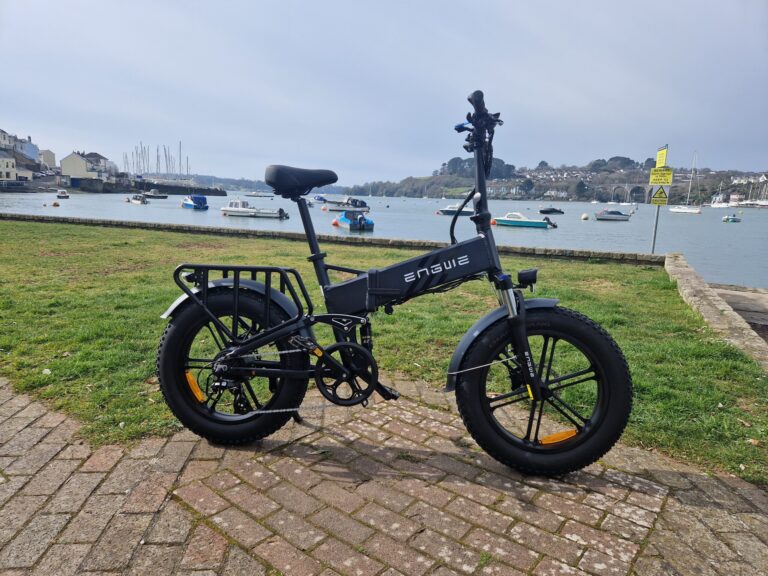
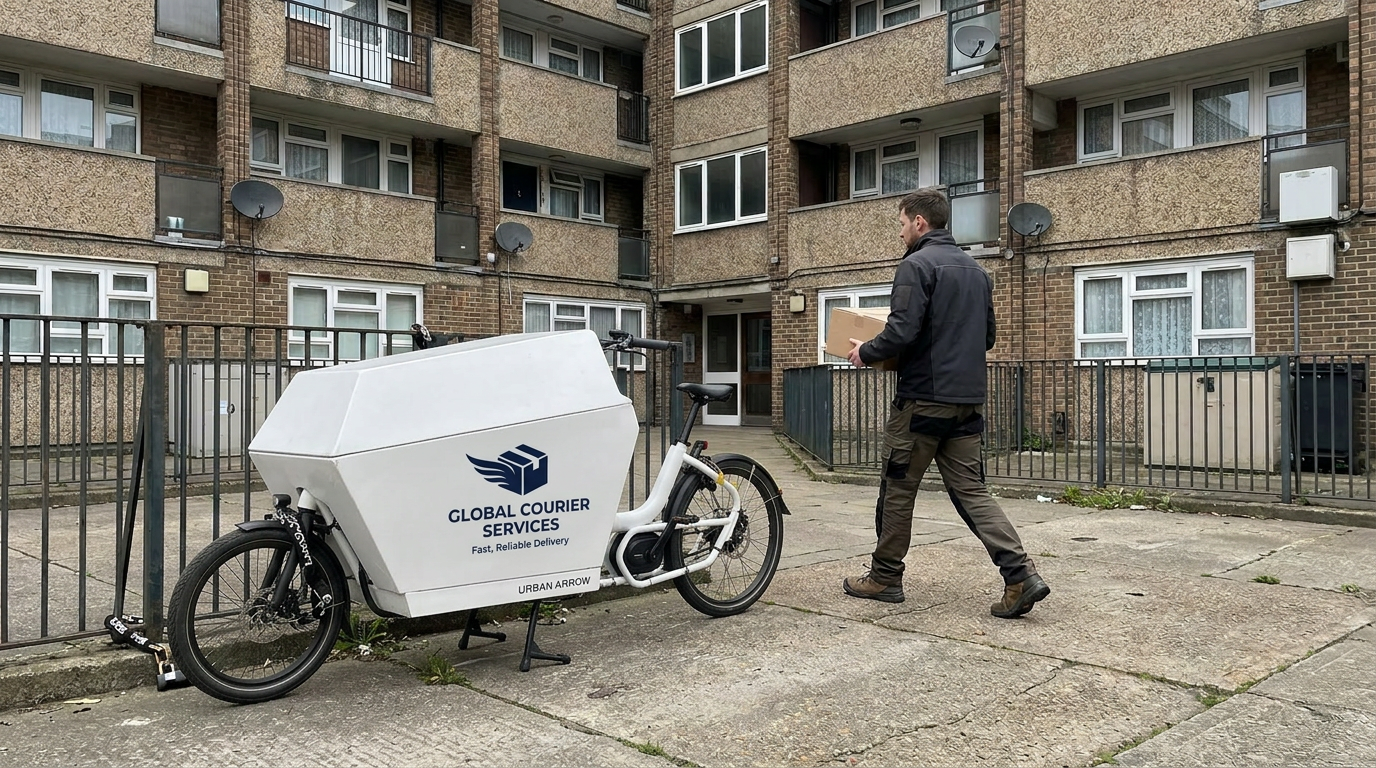
A standard e-bike has limited carrying capacity, usually a rack or small panniers. A cargo bike is built for the job, with larger racks or boxes and much higher payload capacity.
This matters because multi-drop delivery is all about volume, not just weight.
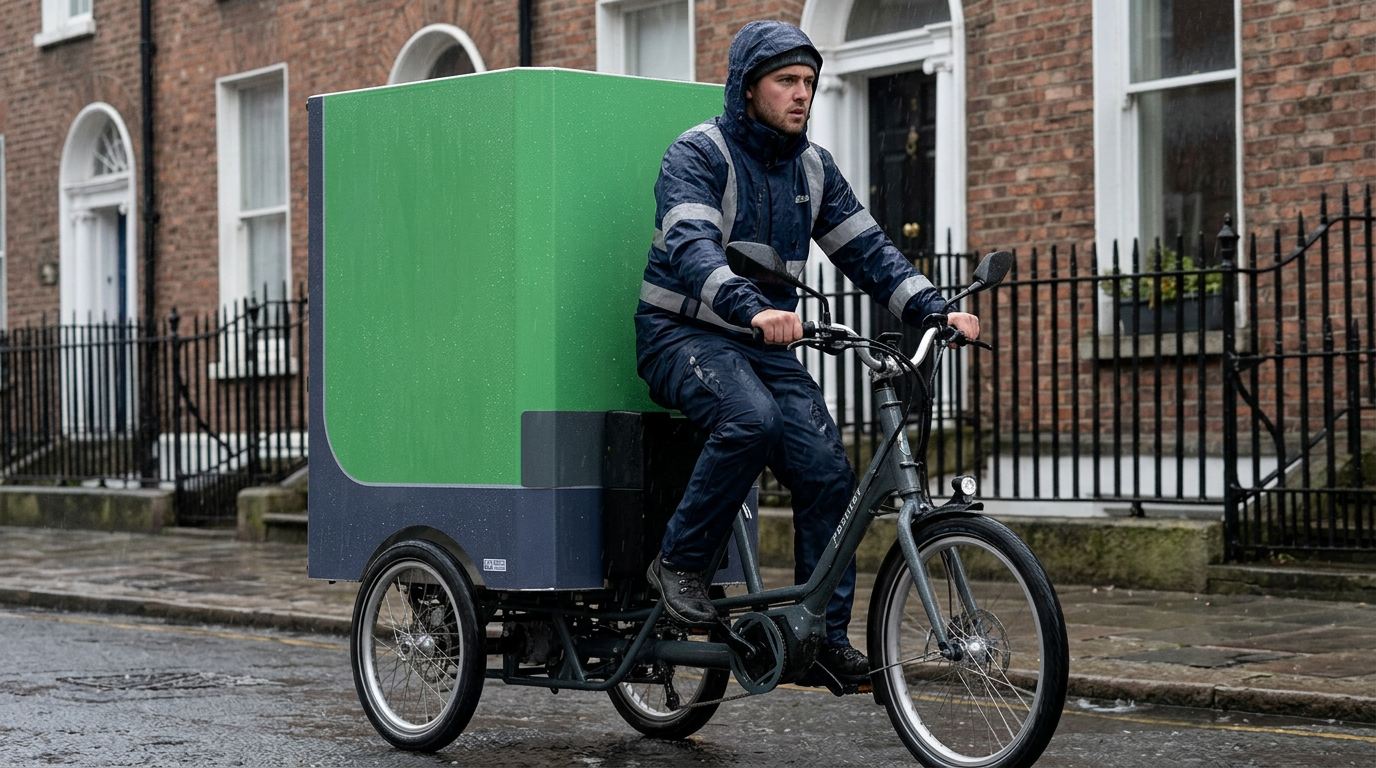
What companies are actually using e-bikes for delivery?
This isn’t just a concept. Several companies are already using e-bikes and cargo bikes for real delivery work in the UK and across Europe.
At the gig-work end of the scale, platforms like Amazon Flex are primarily built around car-based delivery, but Amazon has also been expanding shorter urban delivery routes through services like Amazon Now (which concentrates on things like groceries and household essentials). These are designed for quicker, local drops and are much closer to what an e-bike courier could realistically handle.
There are also newer delivery platforms that are more focused on bike-based logistics. For example, Relay offers parcel delivery work specifically for e-bike riders in urban areas, with routes designed around density rather than distance.
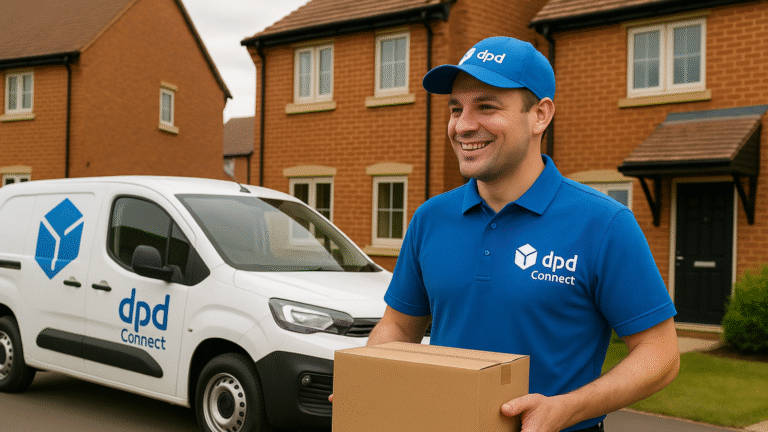
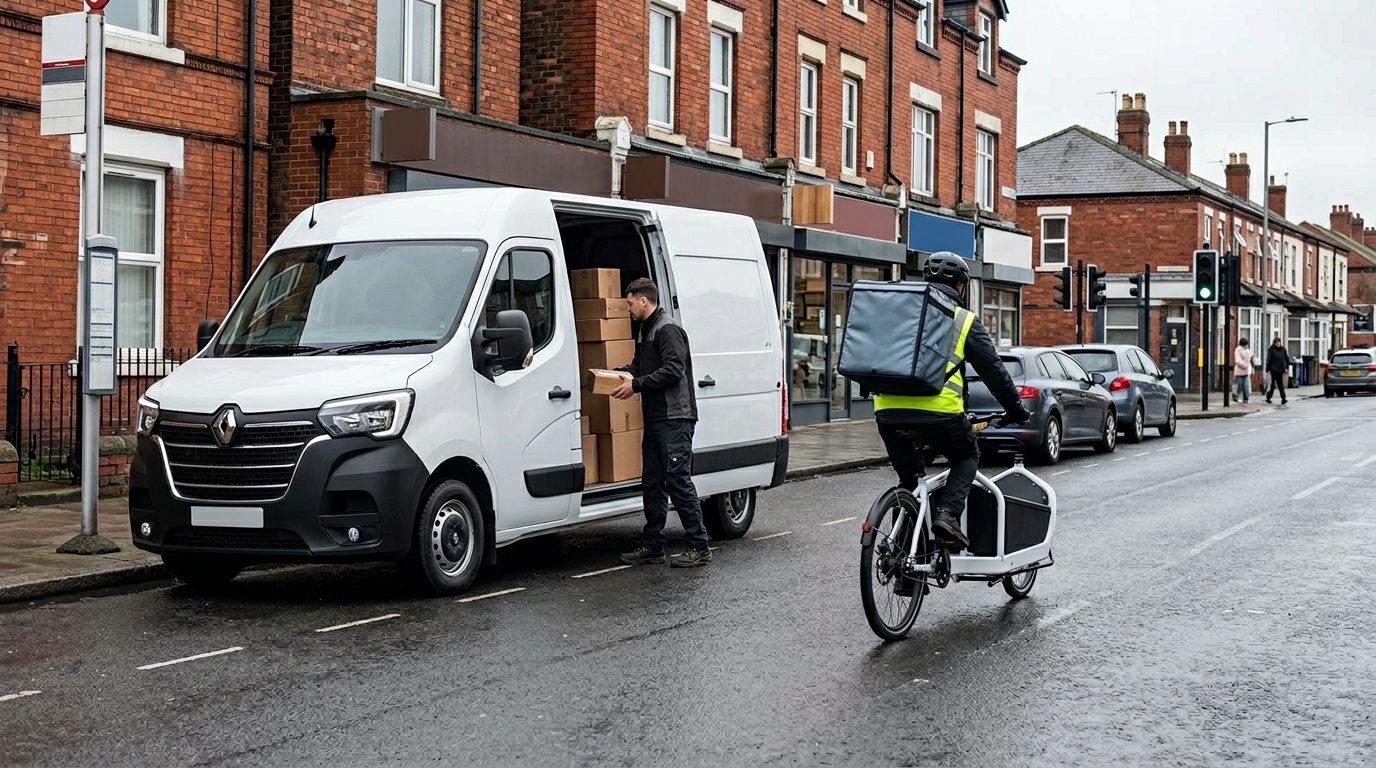
On the larger logistics side, companies like Amazon, DHL, and DPD have all trialled cargo bike hubs in major cities. These typically operate on a hub-and-spoke model, where vans bring parcels into a central location, and e-bike couriers handle the final delivery stage.
The key takeaway is that e-bike delivery is already being used in the real world, but mostly in dense urban areas where it actually makes sense.
How many parcels can you realistically carry?
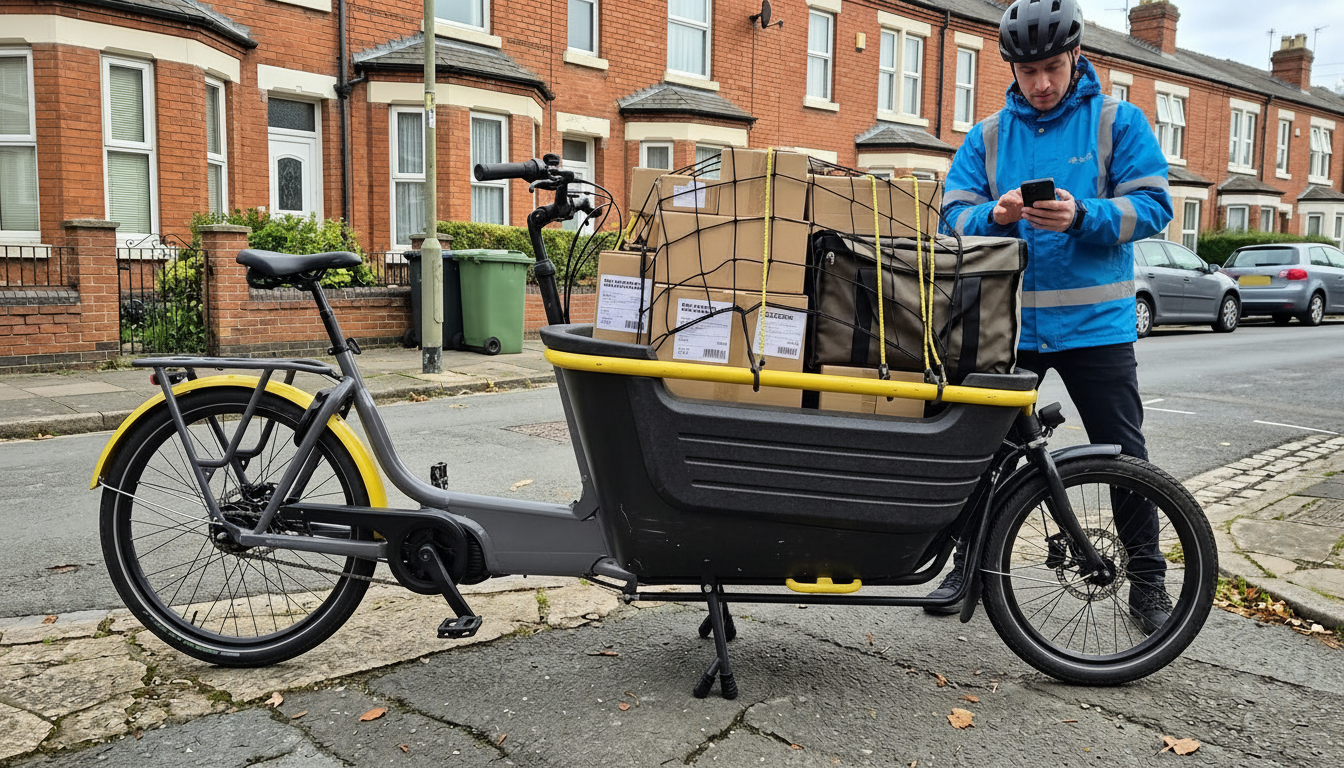
A standard parcel tote bag (like Amazon drivers use) can hold roughly 25 to 35 small packages, e.g. envelopes, book folders, etc.
Based on that:
- Cargo e-bike: 2–3 tote bags (50–100+ parcels)
- Standard e-bike: 1 tote bag (25–35 parcels)
That’s enough for a small urban route, especially where stops are close together.
What kind of routes actually work?
E-bikes are ideal for:
- City centres
- High-density housing
- Flats and apartments
- Areas with poor parking
In these environments, bikes can often outperform vans because they avoid delays caused by traffic and parking.
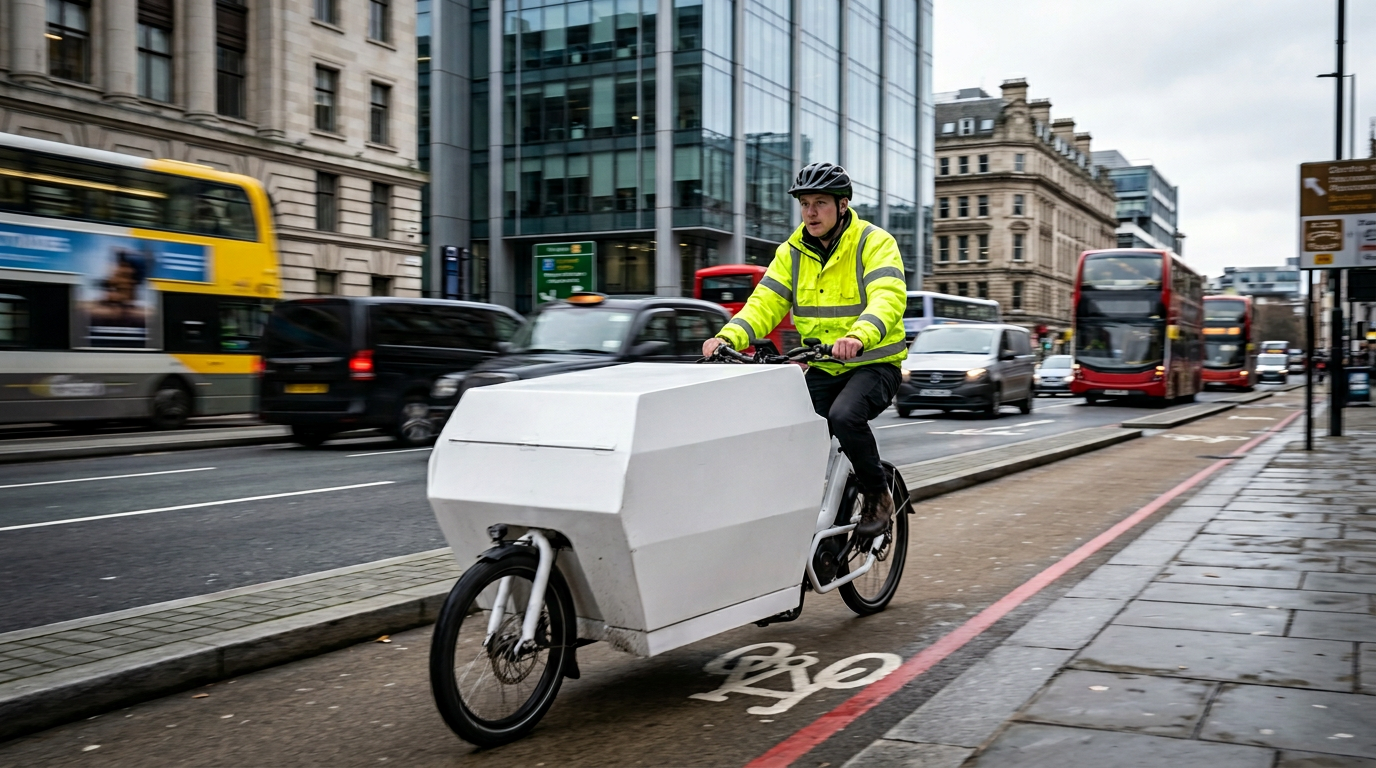
Could you do 30–40 drops on an e-bike?
In the right conditions, yes.
If the parcels are small enough and the stops are close together, a single tote bag could cover 30–40 drops in a shift. With a cargo bike, that number could increase significantly. A typical Deliveroo-style food bag or similar would just about cover it.
The real challenges
Things that make it harder than it looks
- Parcel size varies massively
- The weather can slow you down
- Physical effort adds up
- Battery range drops with heavy loads
Even with electric assist, this is still physical work. Stop-start riding and dealing with awkward deliveries all take their toll.
What about pay?
This is still evolving. Some companies are trialling urban delivery hubs where bikes handle the final leg of delivery.
Typically, work may be paid:
- Per drop
- Per delivery block
- Or hourly
The key question is whether lower running costs balance out lower carrying capacity.
Is it better than van work?
Not better. Just different.
- Van: more capacity, longer routes
- E-bike: faster in cities, lower costs
In many cases, they now work together in a hub-and-spoke model.
Where this is heading
With more restrictions in cities and pressure to reduce emissions, e-bike delivery is likely to grow.
Studies suggest a significant portion of urban van deliveries could be replaced by cargo bikes due to efficiency and reduced downtime.
Final thoughts
So, can you do multi-drop parcel delivery on an e-bike?
Yes — but only in the right conditions.
It works best when routes are dense, parcels are small, and the setup is properly designed.
Like everything in this industry, it comes down to whether the numbers stack up.